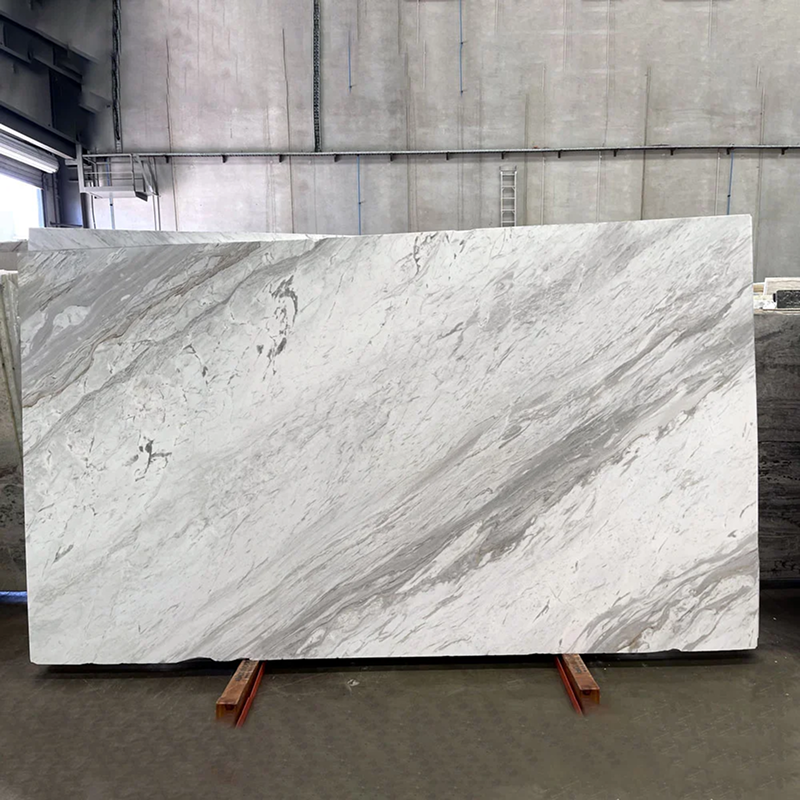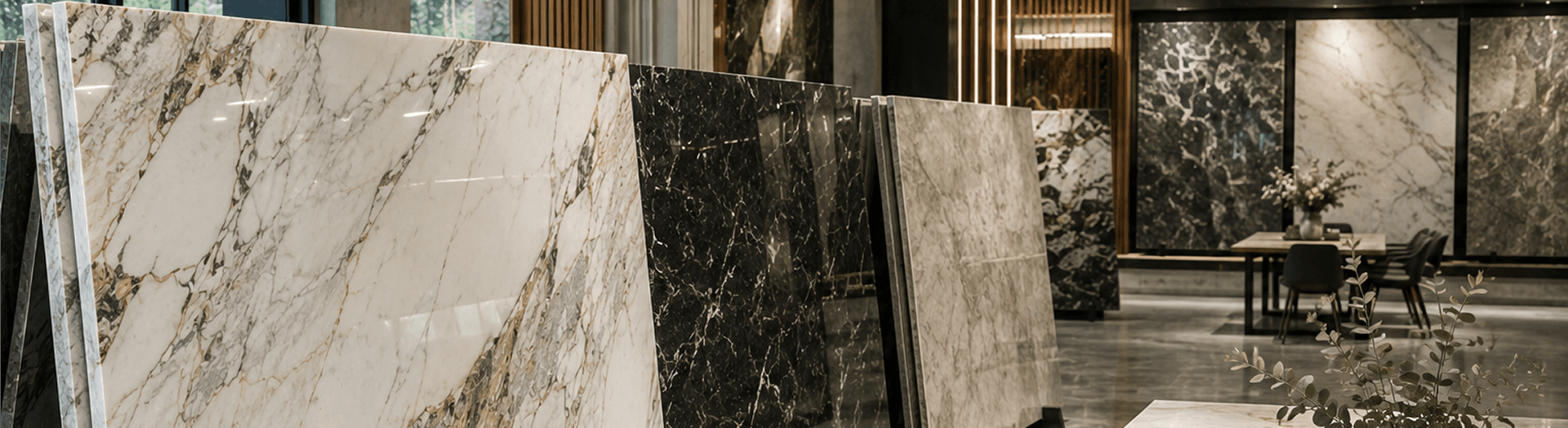
StoneMart supplies premium marble slabs to Melbourne homeowners, builders and designers — for kitchen benchtops and islands, bathroom vanities, feature walls, fireplaces and the kind of interiors where a single surface sets the tone for the room. Slabs can be viewed in person before you commit, which for marble matters more than for almost any other material.
Explore Our Marble Collection
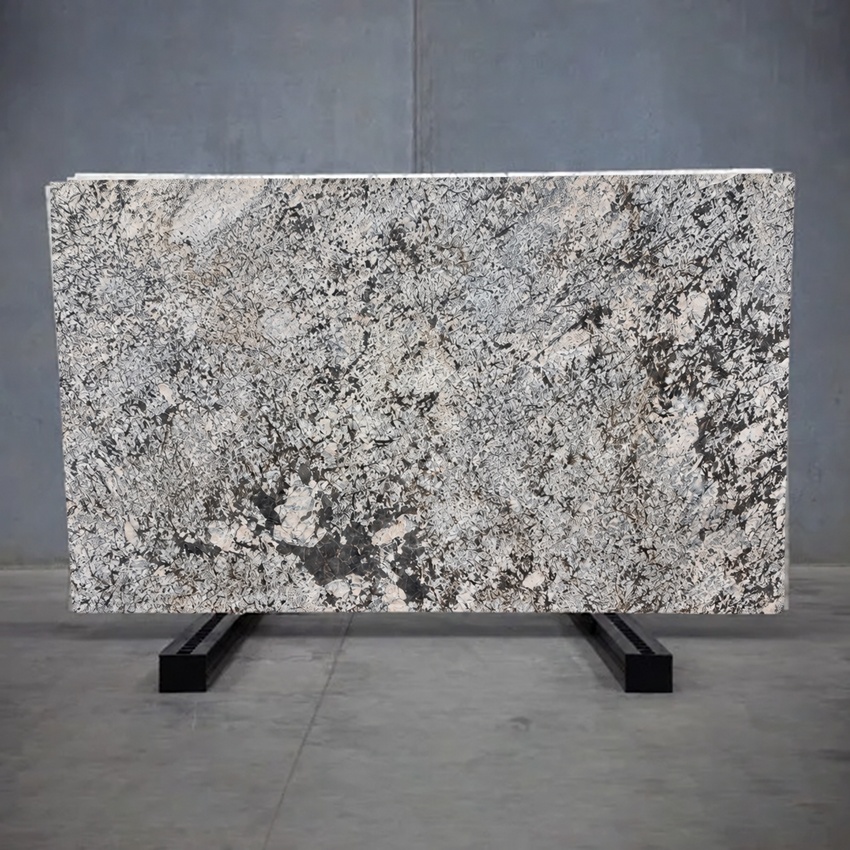
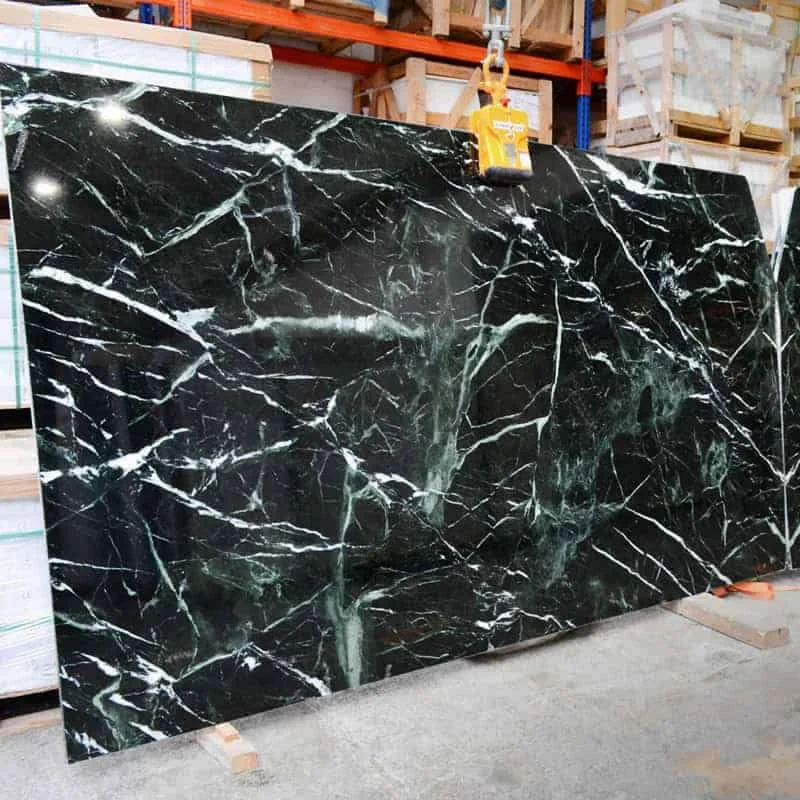
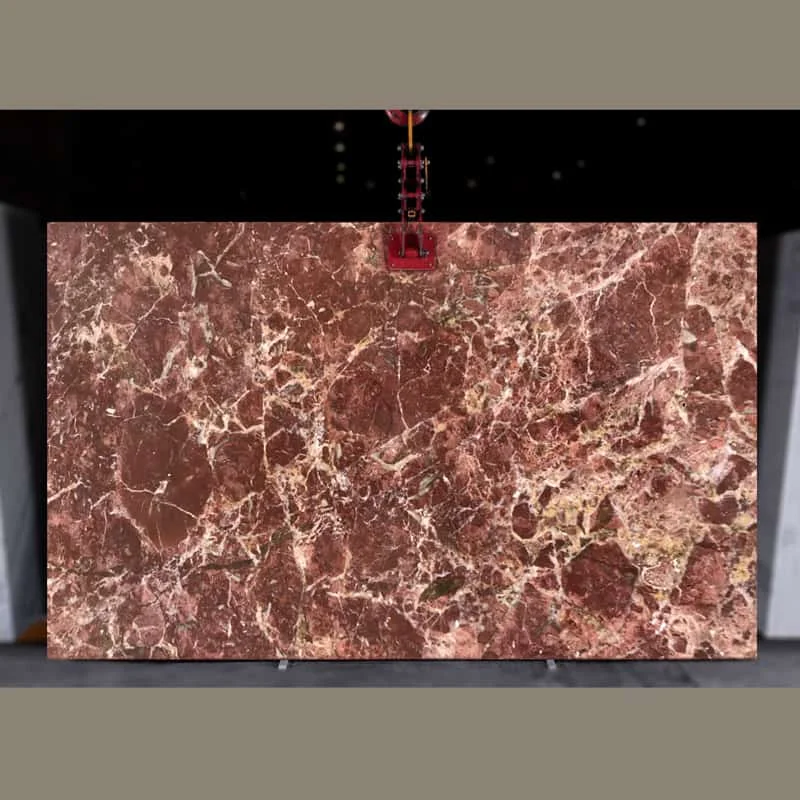
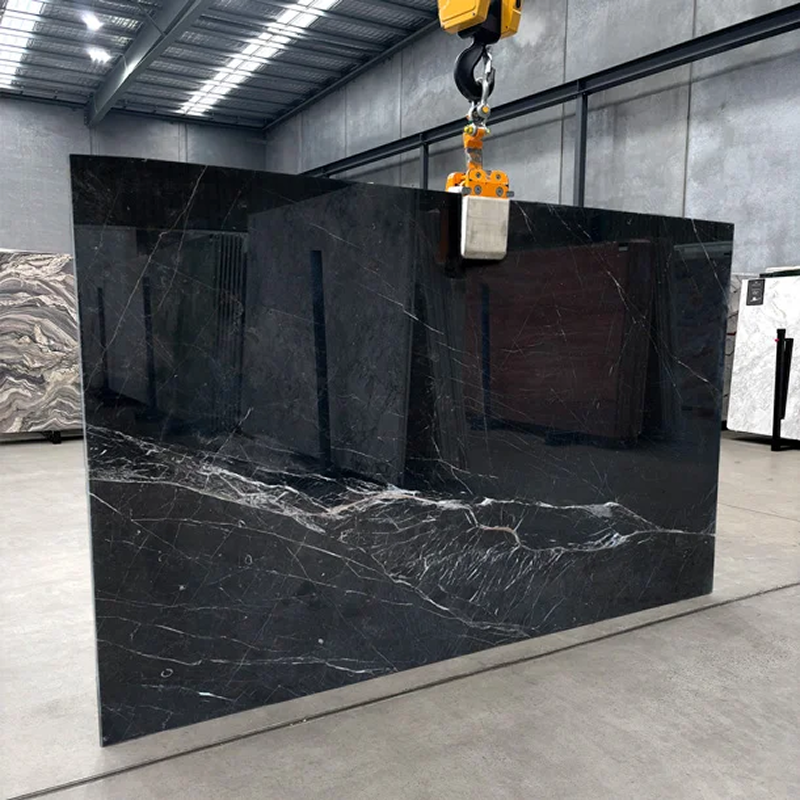
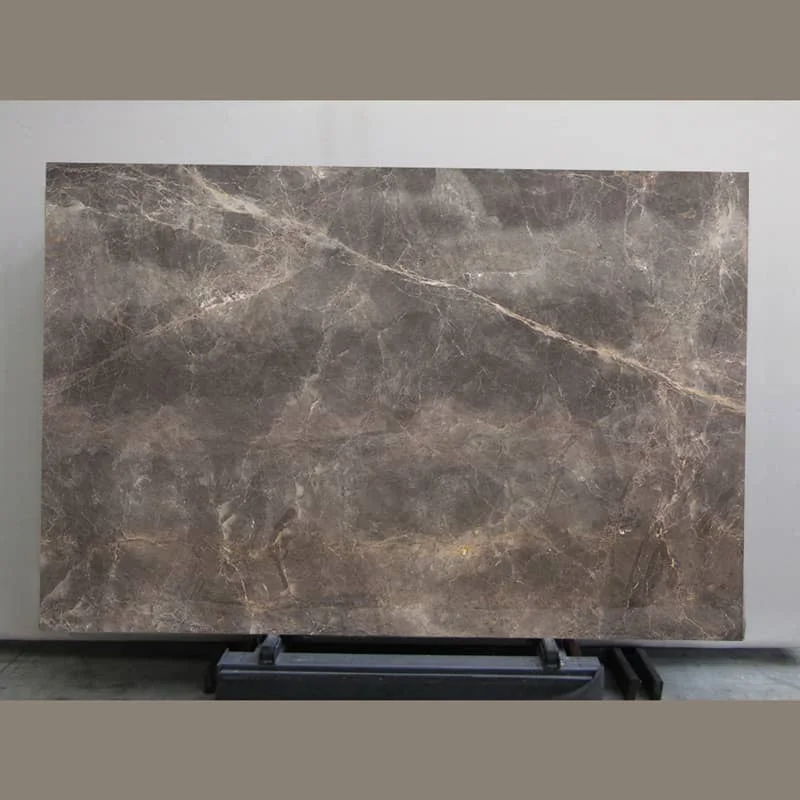
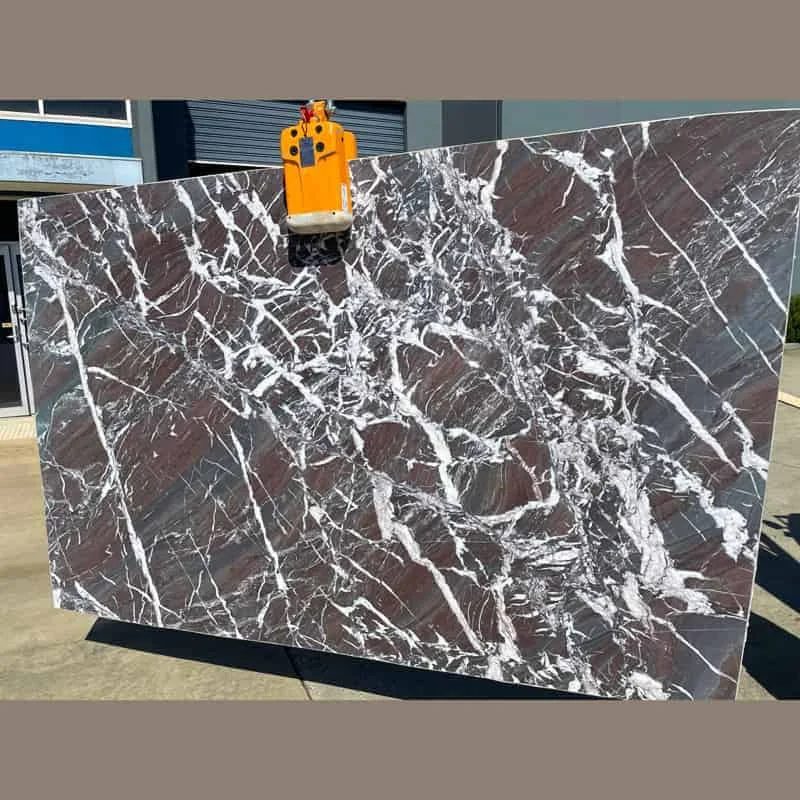
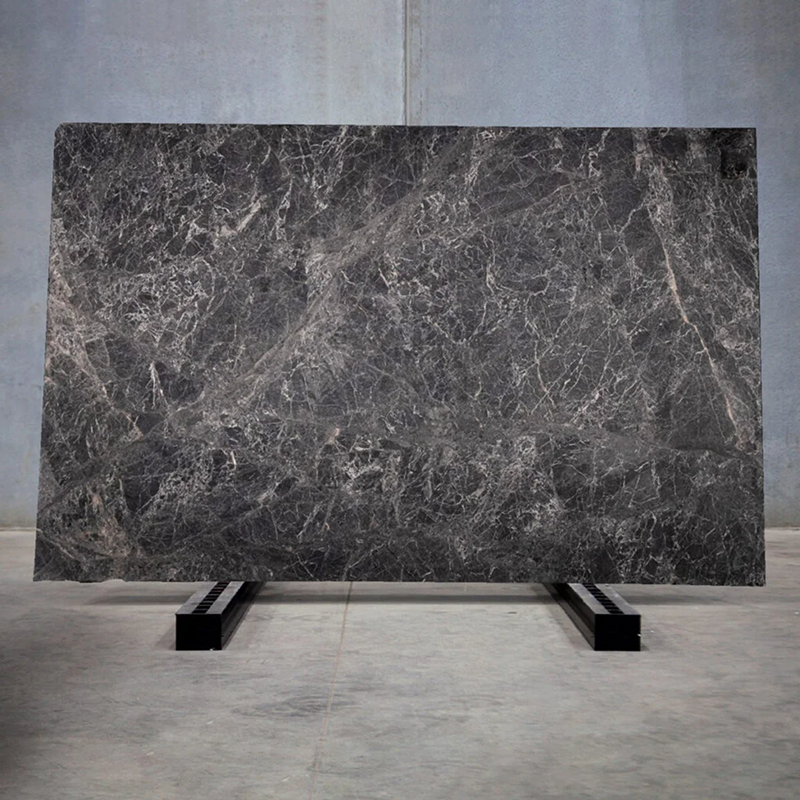
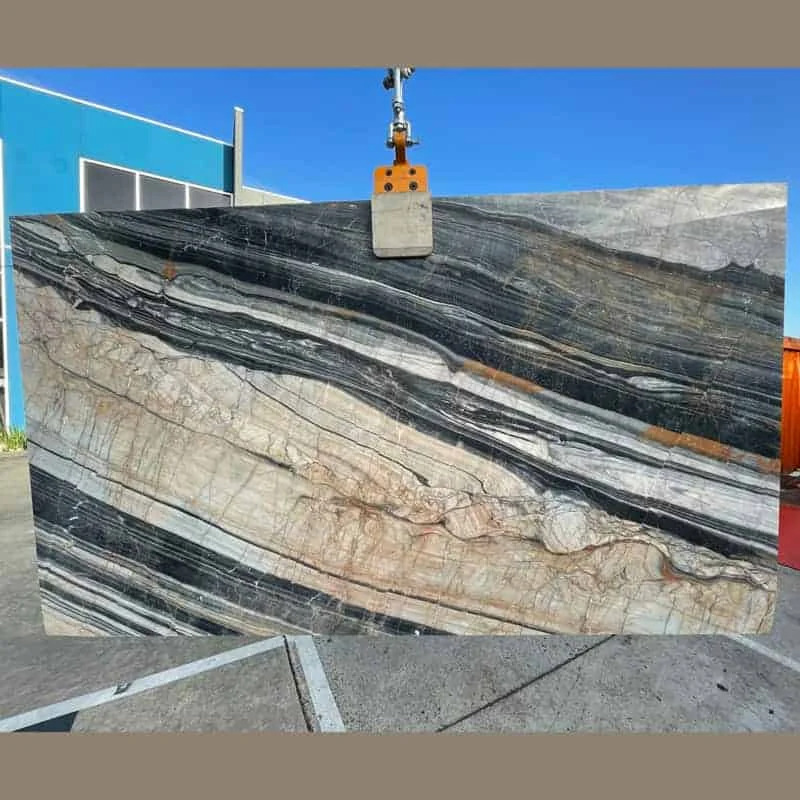
A selection of the marble currently in stock. Each slab has its own veining — view the full marble range for everything available.
Marble Slabs for Kitchen Benchtops
Marble remains the most requested stone for kitchen benchtops and islands, and the reason is simply how it looks: soft, luminous veining that no manufactured surface reproduces convincingly when you are standing next to it.
It is a calcareous stone, so it reacts to acids. Lemon juice, vinegar, wine and some household cleaners can etch the surface — a dulled mark in the polish rather than a stain. Many owners accept this as patina; others find it frustrating. Deciding which you are is the single most useful thing to do before choosing. A honed finish generally shows etching less than a polished one.
For a benchtop, we would encourage viewing the actual slab rather than a sample. Veining moves across a slab, and where the cuts fall decides what ends up on your island.
More on this in the pros and cons of marble benchtops in the kitchen and the best natural stone for kitchen benchtops. You can also compare materials on our stone benchtops Melbourne page.
Marble for Bathrooms and Vanities
Bathrooms suit marble well. A vanity top is a smaller surface than a kitchen bench and sees far less acidic contact, so the material behaves more predictably — and a single well-chosen slab makes a modest bathroom feel considerably more expensive than it was.
Marble also works on bathroom walls and floors, and in showers where the specific stone, finish and sealing system suit wet-area use. Not every marble is appropriate in every position: floors and shower bases ask about surface grip when wet, and that depends on the finish rather than the material name. Ask about the exact product before specifying it.
Marble for Feature Walls, Fireplaces and Interiors
Beyond kitchens and bathrooms, marble is used for the surfaces that are meant to be looked at: fireplace surrounds, feature walls, reception desks, tabletops and stair treads. Vertical applications are also the most forgiving — a feature wall sees none of the spills or heat a benchtop does, so the more dramatic stones become viable there.
Book-matching, where two slabs are cut and opened like a book so the veining mirrors across the join, is worth considering for a wall or a waterfall island. It needs to be planned at slab selection rather than at installation.
See how these materials look in completed homes in our project gallery.
Popular Marble Colours and Styles
Colour availability changes as slabs sell, so the counts below move. Each link opens the current natural stone range in that colour.
White Marble
The classic: Carrara, Calacatta and Statuario, pale grounds with grey or gold veining. The most requested for kitchens and the safest choice in a room you want to feel larger. Browse white stone.
Grey Marble
Cooler and more contemporary, from soft dove greys to darker charcoals with white veining. Pairs well with timber and matte-black fittings. Browse grey stone.
Green Marble
Deep, saturated greens with white or gold veining — a statement stone that has returned to favour for islands, vanities and bars. Browse green stone.
Red / Burgundy Marble
Warm reds and burgundies with dramatic movement. Used sparingly and to strong effect — a fireplace surround or a single feature rather than a whole kitchen. Browse red stone.
Black Marble
Near-black grounds with bright white or gold veining, such as Nero Marquina. High contrast, and striking against pale joinery. Browse black stone.
Honed vs Polished Marble
The same slab in two finishes reads as two different stones.
Polished is buffed to a reflective sheen. Colours look deeper, veining looks sharper, and the surface reflects light around the room. It also shows etching more readily — an acid mark appears as a dull patch against the shine.
Honed is ground to a flat matte finish. Tones are softer and less saturated, and because there is no shine to interrupt, etch marks are far less visible. It is the more forgiving choice for a working kitchen, and the more contemporary look.
Neither is more durable than the other — the stone underneath is the same. The difference is how visible wear is, not how much of it occurs.
How to Choose the Right Marble Slab
- See the actual slab. Not a sample. Veining varies across a slab and between slabs of the same stone, so the specific piece is what you are choosing.
- Look at it whole. A pattern that reads beautifully at arm’s length can be overwhelming across a three-metre island. Step back.
- Decide the finish first. Honed or polished changes the colour, the sheen and how visible etching will be.
- Check the dimensions. Slab size and thickness determine whether your layout can be cut without a join, and where any join has to fall.
- Plan fabrication early. Mitred edges, waterfall ends and book-matching all need to be decided at slab selection, not after.
- Be honest about maintenance. Sealing, material-specific cleaners and prompt spill cleanup are ongoing habits.
Does Marble Need Sealing?
Yes — most marble benefits from a suitable impregnating sealer, and for a kitchen benchtop we would treat it as expected rather than optional.
What a sealer does is narrower than people assume. It slows absorption, which buys you time to wipe a spill before it stains. It does not make marble stainproof, and it does not prevent acid etching — etching is a physical reaction with the stone surface, not a stain sitting on top of it. No sealer stops it.
Requirements vary by stone and finish, and sealers need reapplication over time. Confirm the product, the method and the interval for the specific marble you choose, and test on an offcut first.
How Much Do Marble Slabs Cost in Melbourne?
There is no single price, and any supplier quoting one without seeing your plans is guessing. What actually drives the number:
- The marble itself — rarity, quarry and current availability vary widely, and prices differ between slabs of the same stone.
- Slab size and thickness — and how efficiently your layout cuts from them.
- Finish — honed and polished are processed differently.
- Fabrication — edge profiles, sink and cooktop cutouts, waterfall ends and book-matching each add work.
- Wastage — veining you want positioned deliberately means cutting around the slab rather than straight through it.
- Installation access — stairs, tight corners and upper floors change the job.
Our guide to stone benchtop costs in Australia covers this in more depth. For a real number, send us your plans and we will price the slabs you are actually considering.
Why Choose StoneMart for Marble in Melbourne?
As the retail arm of Pietra Stone Gallery, StoneMart carries one of the deeper marble ranges available in Melbourne — imported direct from quarries in Italy, Turkey and Greece rather than bought through a local wholesaler, which is what makes the harder stones to find findable, and keeps them priced sensibly.
Slabs can be viewed in person before you commit. For marble, where one slab defines a room and no two are alike, that is the part of the process we would least want you to skip.
See the materials in finished homes in our project gallery, explore the wider natural stone range, or get in touch to arrange a visit.
Frequently Asked Questions
Are marble slabs suitable for kitchen benchtops?
Yes, and marble is the most requested stone for them. It asks for more care than granite or quartzite, and it will show its age — the question is whether you regard that as patina or as damage. A honed finish is the more forgiving choice for a working kitchen.
Does marble stain easily?
Marble is porous, so spills left sitting can stain — oil, wine and coffee are the usual culprits. A sealer slows absorption and buys time to wipe up. Etching is a separate issue: acids react with the stone and leave a dull mark that is not a stain and is not prevented by sealing.
Does marble need sealing?
Most marble benefits from a suitable impregnating sealer, and for a benchtop we treat it as expected. Sealing improves stain resistance rather than making stone stainproof, and it does not prevent acid etching. Requirements vary by stone and finish.
What is the difference between honed and polished marble?
Polished is buffed to a reflective sheen, with deeper colour and sharper veining — and it shows etching more readily. Honed is a flat matte finish with softer tones, where etch marks are much less visible. Durability is identical; visibility of wear is not.
Can I view the actual marble slab before buying?
Yes, and for marble we recommend it. Veining and tone vary across a slab and between slabs of the same stone, so viewing the specific piece is the only way to know what your benchtop or wall will look like. Contact us to arrange a showroom visit.
How much do marble slabs cost in Melbourne?
It depends on the stone, slab size and thickness, finish, fabrication and installation access. Rarity and quarry of origin drive the biggest differences, and prices vary between slabs of the same marble. Send us your plans for a measured quote against the slabs you are considering.
What marble colours are available?
White, grey, green, red and burgundy, and black are all represented in the current range, along with cream and beige tones. Availability changes as slabs sell — browse the marble collection for what is in stock now.