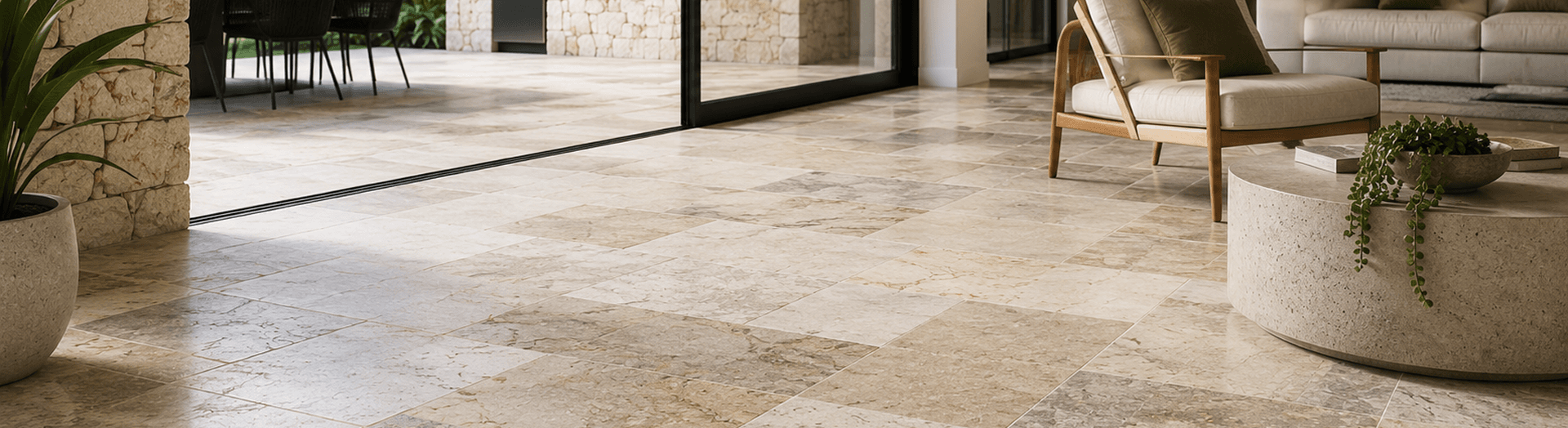
Explore StoneMart’s premium range of natural stone tiles in Melbourne, available in a variety of colours, finishes and formats for floors, walls, bathrooms, kitchens and outdoor spaces.
Explore Our Natural Stone Tile Range
Each range below opens the current stock. Availability moves as stone sells, so the collections are the reliable view.
- Natural Stone TilesThe core tile range, across formats suited to floors, walls and wet areas.
- Marble TilesVeined and luminous, for bathrooms, feature walls and interior floors.
- TravertineWarm, textured and naturally pitted — the most versatile indoor–outdoor stone.
- LimestoneSoft, even tones with minimal veining for a calmer surface.
- Stone Mosaic TilesSmall-format sheets for shower floors, splashbacks and detail work.
- Subway TilesStone in the classic rectangular format for walls and splashbacks.
- Stone PaversThicker formats for patios, alfresco areas and paths around the house.
- Pool Coping TilesBullnose and drop-face profiles for the edge between pool and paving.
Marble Tiles
Marble tiles carry the veining marble is chosen for, at a scale that suits walls and floors rather than benchtops. In a bathroom or entry, a marble floor does more for the room than almost any other surface at the same cost.
It is a calcareous stone, so it reacts to acids — and in a tiled application the grout and the cleaning routine matter as much as the stone. Avoid vinegar, citrus and generic bathroom sprays; use a cleaner made for natural stone. A honed finish hides both etching and foot traffic better than a polished one.
Browse marble, or for benchtops and larger surfaces see our marble slabs Melbourne page.
Travertine Tiles
Travertine is the most versatile stone in the range. Formed in mineral springs, it has a warm, banded appearance and a naturally pitted surface — those small voids are characteristic of the stone, and may be filled or left open depending on the product.
Its warm tones and textured finishes suit both interiors and outdoor areas, which is why it appears so often around pools, courtyards and alfresco spaces as well as in bathrooms. A tumbled travertine has softened edges and an aged look; a honed and filled one reads far more contemporary.
Travertine is porous, so finish, fill and sealing all need to match the location. Browse travertine.
Natural Stone Tiles for Bathrooms
Bathrooms are where stone tiles earn their keep. Walls, floors, vanity tops and shower surrounds can all be done in the same material, and the result reads as a single considered space rather than an assembly of finishes.
Wet areas do ask more specific questions. A shower floor needs surface grip when wet, which depends on the finish rather than the stone — mosaic sheets are often used there because the extra grout lines add texture underfoot. Falls, drainage, waterproofing and a compatible sealer all matter as much as the tile itself.
See what suits bathrooms, or the stone mosaic range for shower floors and detail work.
Natural Stone Tiles for Floors and Walls
Through living areas, hallways and kitchens, a stone floor gives a room a weight and coolness that timber and vinyl do not. Larger formats mean fewer grout lines and a calmer floor; smaller formats suit rooms with more corners to work around.
On walls, stone shifts from a surface to a feature. A fireplace surround, a hallway wall or a kitchen splashback in the same stone as the floor ties a scheme together — and vertical surfaces are far more forgiving, since they see no traffic and few spills.
Browse tiles suited to floors and walls. If a renovation is driving the decision, our guide to renovating a kitchen with natural stone covers the sequence, and our stone benchtops Melbourne page covers the surfaces above them.
Natural Stone Tiles for Outdoor Areas
Outdoors, stone moves from tiles to pavers — thicker formats laid on a different system, made to take weather, movement and load. Patios, alfresco areas, paths and pool surrounds are the common applications, and travertine, bluestone and granite are the stones that appear most often.
Continuing the same stone from an indoor floor out to a terrace, in a paver format and a more textured finish, is one of the more effective things you can do with the material. Around a pool, the coping profile — bullnose, rebated or drop-face — is a separate decision from the paving.
Browse stone pavers and pool coping tiles, or read our comparison of natural stone vs porcelain pool pavers. You can also see everything rated for outdoor paving.
Honed vs Polished vs Tumbled Natural Stone Tiles
The same stone in three finishes behaves and looks like three different products.
Polished is buffed to a reflective sheen. Colour looks deepest and veining sharpest, and the surface bounces light — but it shows etching and wear most readily, and it is the least appropriate starting point for a wet floor.
Honed is ground flat to a matte finish. Softer colour, no shine to interrupt, and marks are far less visible. The usual choice for interior floors and bathrooms.
Tumbled is agitated to round the edges and roughen the face, giving an aged, textured look. Common in travertine, and often chosen outdoors and around pools where texture is wanted underfoot.
None is more durable than the others — the stone is the same. The finish changes how visible wear is, and how the surface behaves when wet.
How to Choose the Right Natural Stone Tile
- Start with location. A shower floor, a hallway and a terrace ask different things. Decide where before deciding what.
- Then the finish. It governs grip when wet, how visible wear is, and how the colour reads — more than the choice of stone does.
- Ask about slip resistance. For wet areas, ask for the test method and the recorded wet rating for the exact product and finish, not a general description.
- Size the format. Large formats mean fewer grout lines and a calmer surface; small formats suit rooms with obstacles, and mosaics add grip.
- View several pieces together. Variation is the point of stone, and one tile will not show you the range you will actually receive.
- Confirm the maintenance. Sealing, compatible cleaners and grout care are ongoing, and they vary by stone and finish.
- Order enough. Allow for cuts, breakage and future repairs — matching a discontinued batch later is rarely possible.
Do Natural Stone Tiles Need Sealing?
Usually yes — most natural stone tiles benefit from a suitable impregnating sealer, and in bathrooms, kitchens and outdoor areas we would treat it as expected rather than optional.
Requirements do vary. Porous stones such as travertine and limestone absorb more readily than dense ones such as granite, and a honed surface behaves differently from a polished one. Grout needs its own consideration, and is often where staining shows first.
A sealer improves resistance to staining by slowing absorption. It does not make stone stainproof, and on calcareous stones it does not prevent acid etching. Confirm the product, method and reapplication interval for the exact stone and finish, and test on a spare tile first.
How Much Do Natural Stone Tiles Cost in Melbourne?
Stone tiles are priced per square metre, and the range is wide. What moves it:
- The stone — origin, rarity and current availability vary considerably between materials.
- Format and thickness — larger formats and thicker pavers cost more per square metre than standard tiles.
- Finish — tumbling, brushing and filling are additional processing.
- Area and wastage — cuts, pattern and breakage allowance mean ordering more than the measured area.
- Installation and preparation — substrate, waterproofing, adhesive and jointing are separate from the tile.
- Sealing and maintenance — an ongoing cost worth accounting for at the start.
For a real figure, send us your areas and plans and we will price the tiles you are actually considering.
Why Choose StoneMart for Natural Stone Tiles in Melbourne?
StoneMart supplies tiles and pavers to Melbourne homeowners, builders and designers as the retail arm of Pietra Stone Gallery. Importing direct from the quarries is what lets us hold formats and finishes in depth — which matters more for tiles than for slabs, because a floor needs enough of one batch to finish the job and enough left over to repair it later.
Tiles can be viewed in person before you commit — worth doing, since variation between pieces is exactly what you are buying. See the materials in completed homes in our project gallery, explore the wider natural stone range, or get in touch to arrange a visit.
Frequently Asked Questions
Are natural stone tiles suitable for bathrooms?
Yes — walls, floors, vanities and shower surrounds are all common applications. Wet areas ask specific questions about surface grip, falls, waterproofing and sealing, and the answers depend on the exact stone and finish rather than on stone as a category.
Do natural stone tiles need sealing?
Most do. Porous stones such as travertine and limestone absorb more readily than dense ones such as granite, and grout needs its own care. Sealing improves stain resistance rather than making stone stainproof, and it does not prevent acid etching on calcareous stones.
Are natural stone tiles good for floors?
Yes, and they wear extremely well. Choose the finish for the location — honed and tumbled surfaces handle traffic and hide marks better than polished ones — and confirm the tile is rated for floor use rather than walls only.
Can natural stone tiles be used outdoors?
Outdoor areas generally use pavers rather than tiles: thicker formats, laid on a different system, in more textured finishes. Travertine, bluestone and granite are common choices. Confirm the specific product is intended for external use.
What is the difference between marble and travertine tiles?
Marble is denser with flowing veining and a smoother face. Travertine is warmer and banded, with natural pitting that may be filled or left open, and is generally more textured. Marble reads more formal; travertine suits indoor–outdoor schemes.
Are natural stone tiles slippery?
It depends on the finish, not the stone. Polished surfaces are not the starting point for a wet floor; honed, tumbled and brushed finishes offer more texture, and mosaics add grip through extra grout lines. Ask for the wet slip rating for the exact product.
How do you clean natural stone tiles?
Sweep or vacuum grit, and clean with a product made for natural stone. Avoid vinegar, lemon, bleach and generic bathroom sprays — acidic and abrasive cleaners damage calcareous stones such as marble, limestone and travertine. Wipe spills promptly.
How much do natural stone tiles cost in Melbourne?
Pricing is per square metre and depends on the stone, format, thickness and finish, plus wastage, installation and sealing. Send us your areas and we will price the tiles you are considering.
Can I view the tiles before buying?
Yes, and we recommend it. Variation between pieces is inherent to stone, so seeing several tiles together shows you far more than a single sample. Contact us to arrange a visit.