Home  /  Natural Stone  /  Stone Benchtops Melbourne
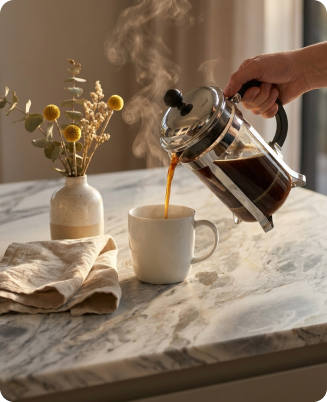
Taj Mahal Quartzite waterfall island and benchtop in a warm contemporary kitchen
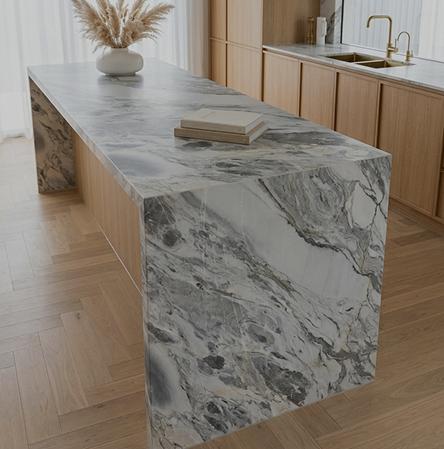
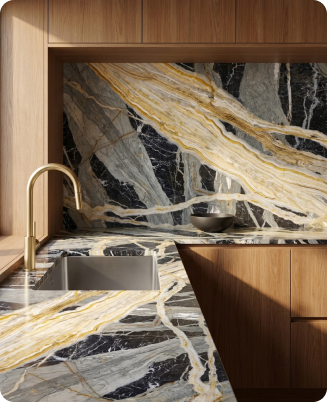
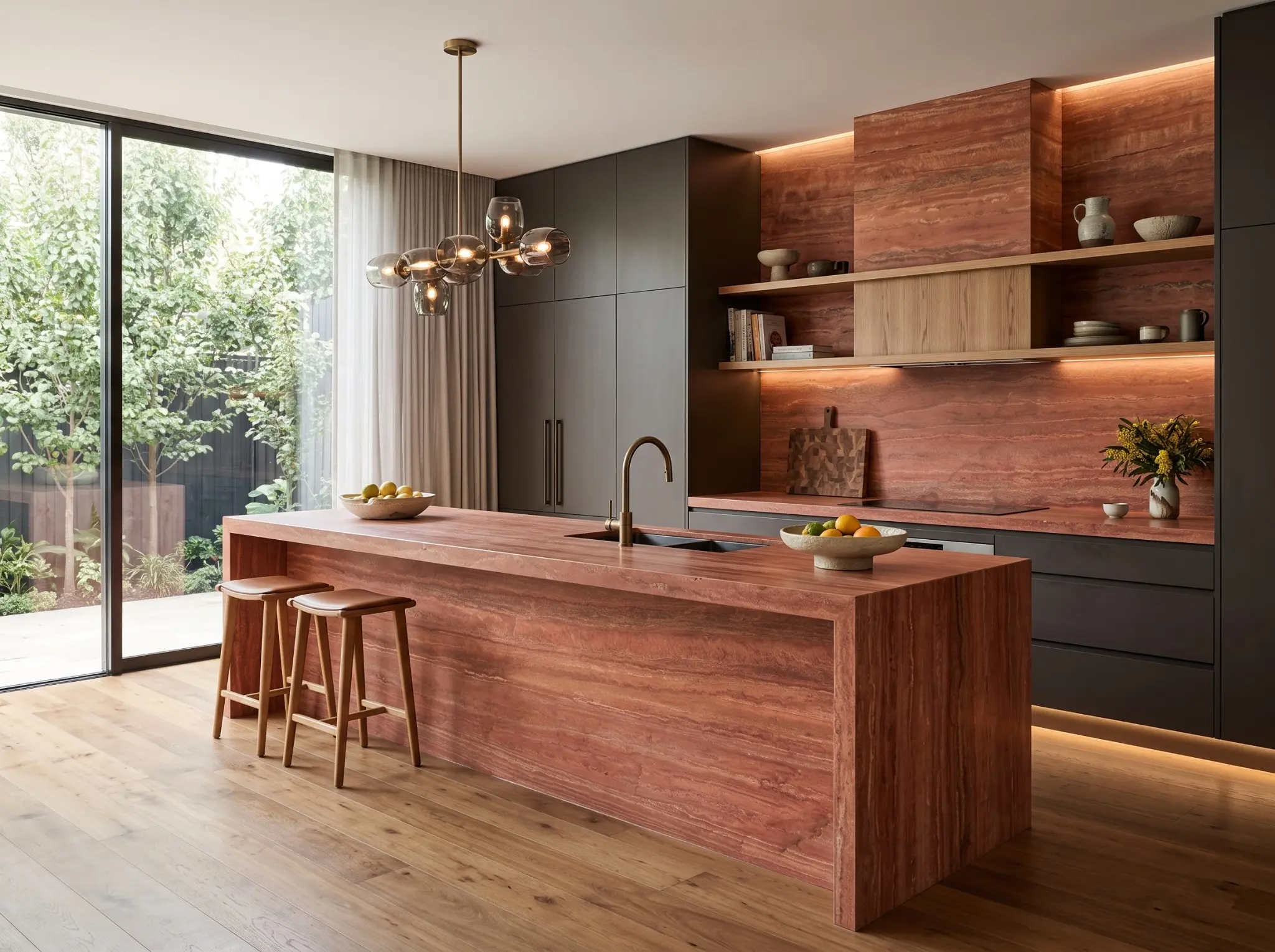
Rosso Travertine waterfall kitchen island and matching splashback
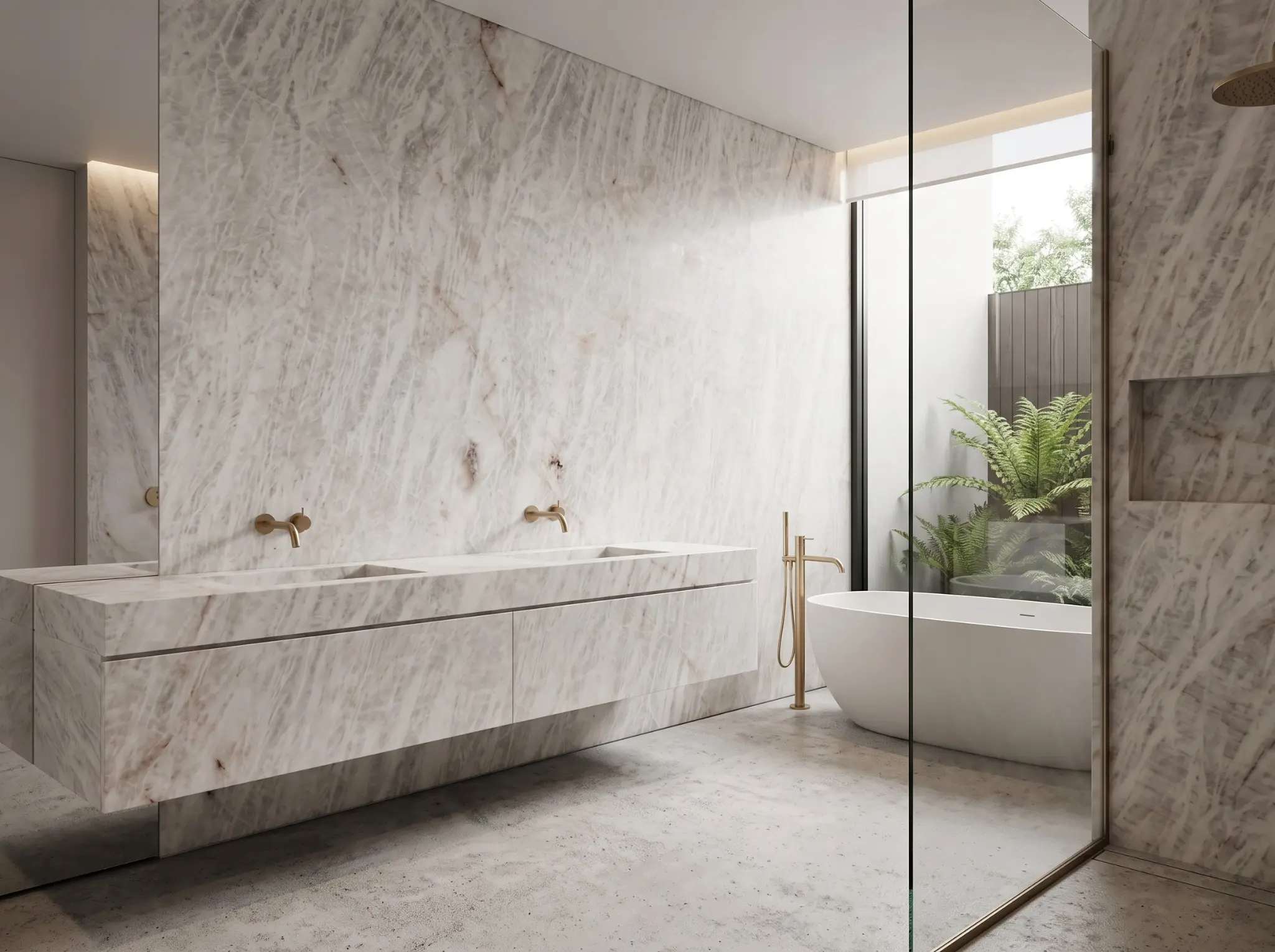
Cristallo stone double bathroom vanity with matching wall cladding
Natural stone · Melbourne

Natural Stone Kitchen Benchtops Melbourne

A benchtop is the most looked-at and hardest-worked surface in a kitchen. Explore quartzite, marble, granite, dolomite and limestone—and select the actual slab that will shape your space.

Choose the actual slab

Natural stone benchtops for Melbourne kitchens

Natural stone is quarried rather than manufactured, so every slab carries its own veining, tone and movement. Two slabs cut from the same block will resemble each other; no two are identical.

For an island—usually the largest uninterrupted surface in the kitchen—that individuality is the reason many people choose stone. It also means a benchtop should be chosen from the actual slab wherever possible, not from a small sample.

Browse our full stone slab collection or view products suited to benchtops and splashbacks.

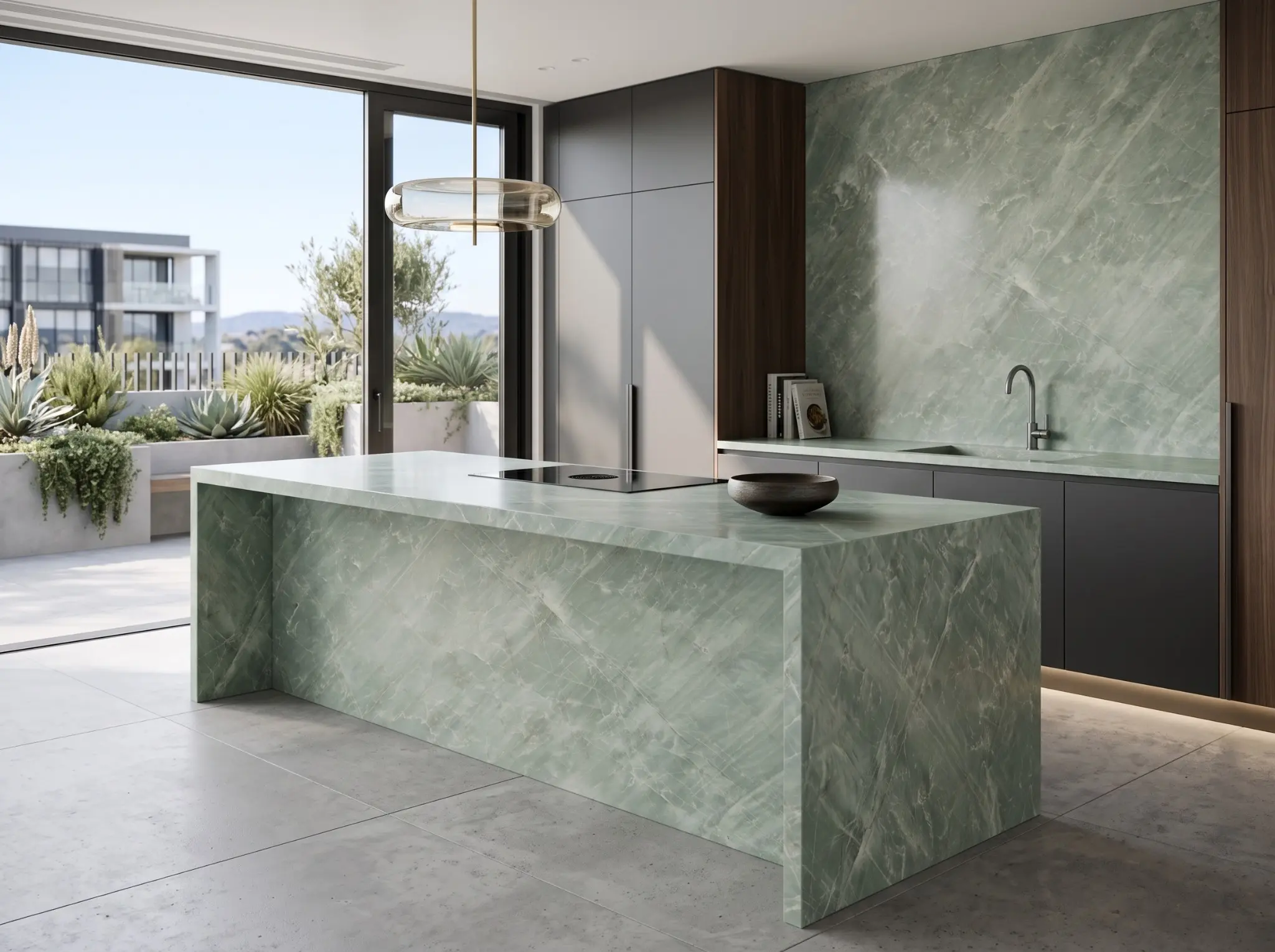
Emerald Haze Quartzite waterfall kitchen island and matching green stone splashback
01 · Natural resilience

Quartzite Natural Stone
Benchtops Melbourne

Expressive natural movement with dependable strength.

What is quartzite?

Quartzite is a metamorphic natural stone formed from sandstone under heat and pressure. It is generally harder and less reactive to acids than marble.

Why choose it for a kitchen?

It suits islands, benchtops and splashbacks where dramatic pattern and a more hard-wearing surface are priorities.

What can I view at StoneMart?

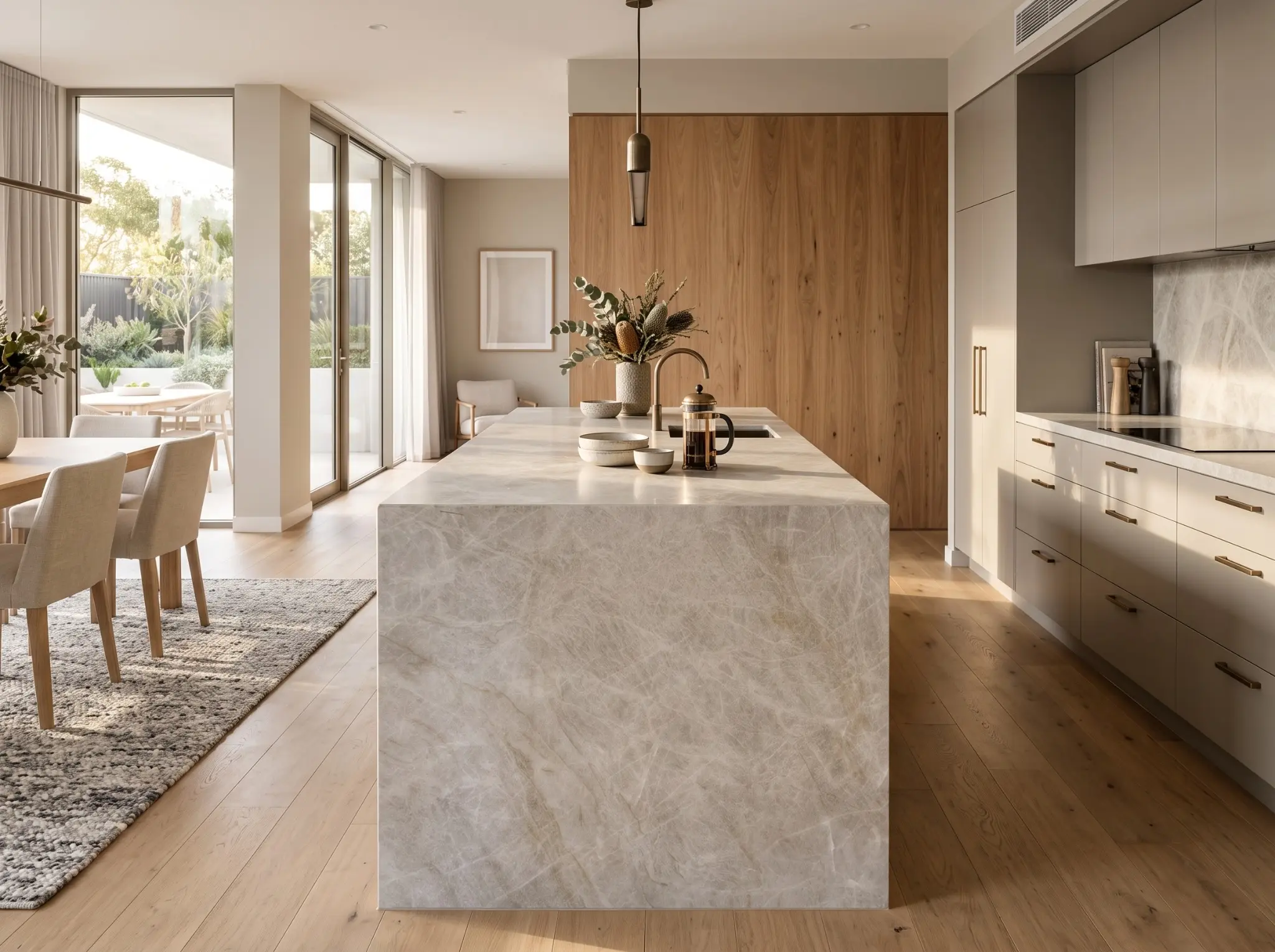
Explore individual slabs including Taj Mahal and a changing selection of distinctive quartzites from international quarries.

View quartzite range →
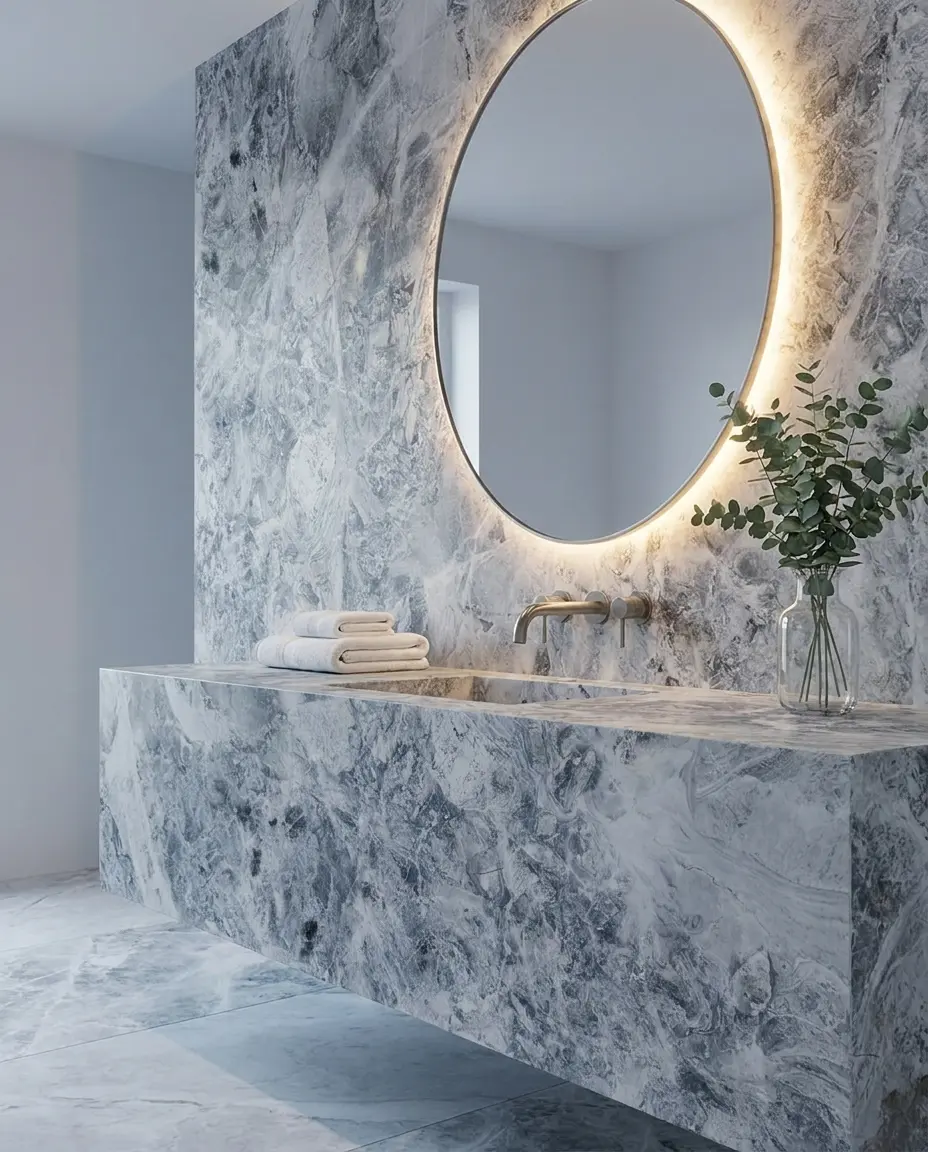
Grey and white stone bathroom vanity benchtop with matching wall and illuminated mirror
02 · Timeless character

Marble Natural Stone
Benchtops Melbourne

Soft, luminous veining that becomes the focal point of a room.

What is marble?

Marble is a calcareous natural stone selected for its depth, veining and distinctive sense of movement. Colours range well beyond classic white and grey.

What should I know?

Citrus, vinegar and wine can etch marble. Sealing helps with staining but does not prevent acid etching, so marble suits owners comfortable with attentive care and natural patina.

Where can it be used?

Marble is used for kitchen benchtops, islands, splashbacks, bathroom vanities, wall features and furniture.

View marble range →
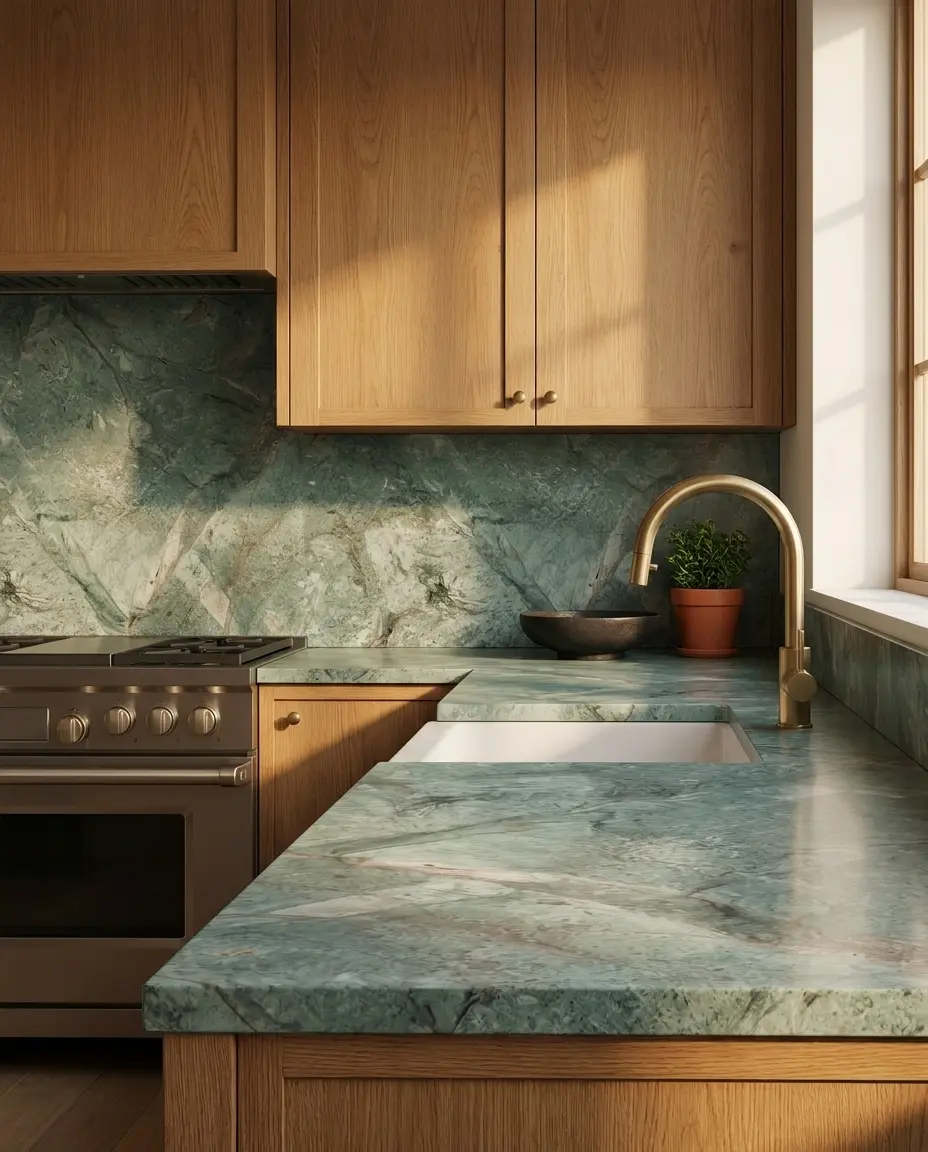
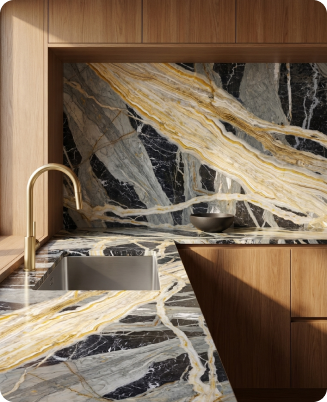
Turquoise Granite kitchen benchtop and splashback with timber cabinetry
03 · Made for daily life

Granite Natural Stone
Benchtops Melbourne

A dense, practical natural stone for hardworking kitchens.

What is granite?

Granite is an igneous stone available in quiet granular patterns as well as bold, highly expressive slabs.

Why choose it for a kitchen?

It is generally more resistant to heat and scratching than marble, making it a strong choice for kitchens that see heavy daily use.

Does granite need sealing?

Many granites benefit from sealing, but the requirement varies by the stone, finish and intended use.

View granite range →
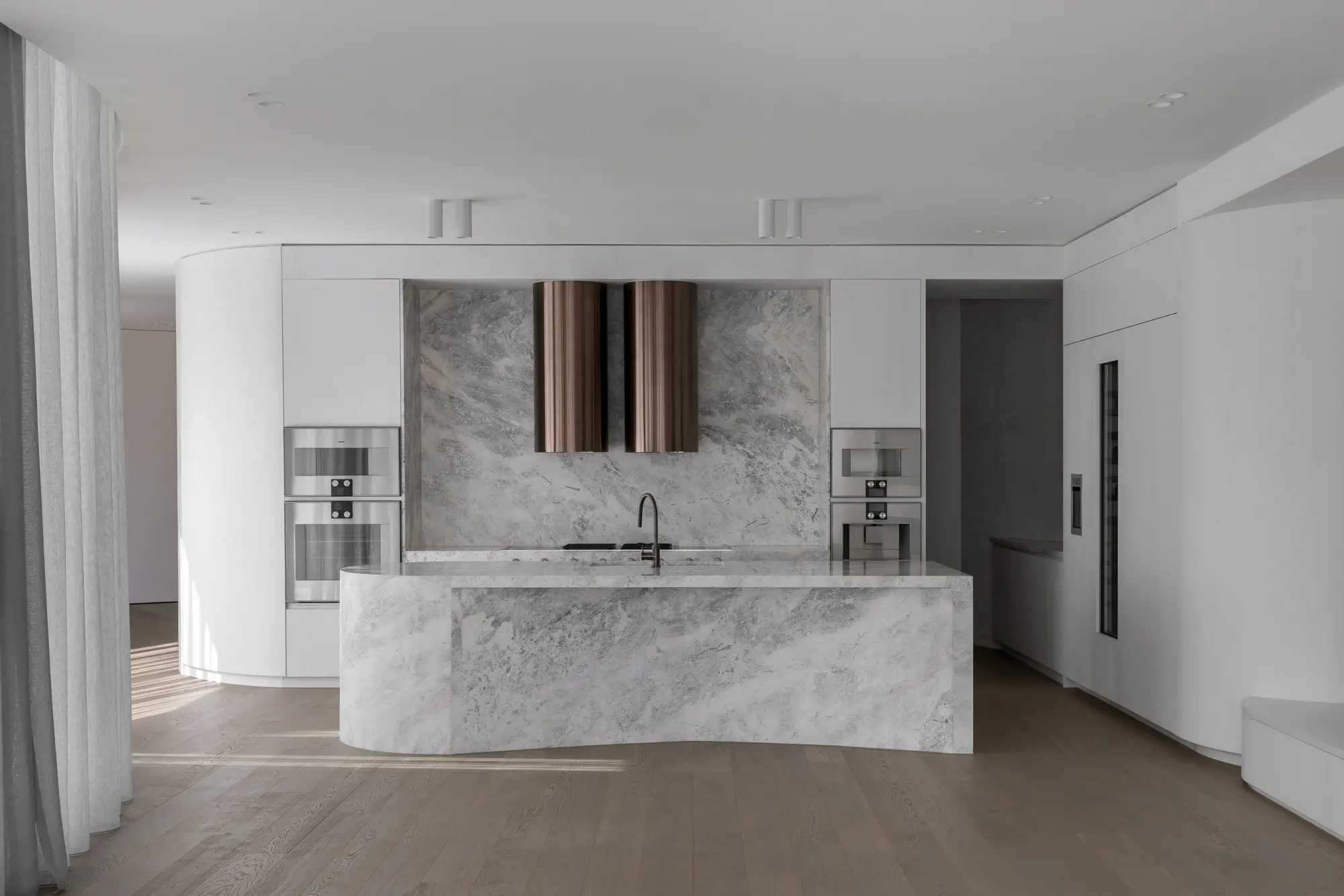
Silver White kitchen island benchtop and matching splashback with white cabinetry
04 · A balanced alternative

Dolomite Natural Stone
Benchtops Melbourne

A pale, marble-like character with greater density than many marbles.

What is dolomite?

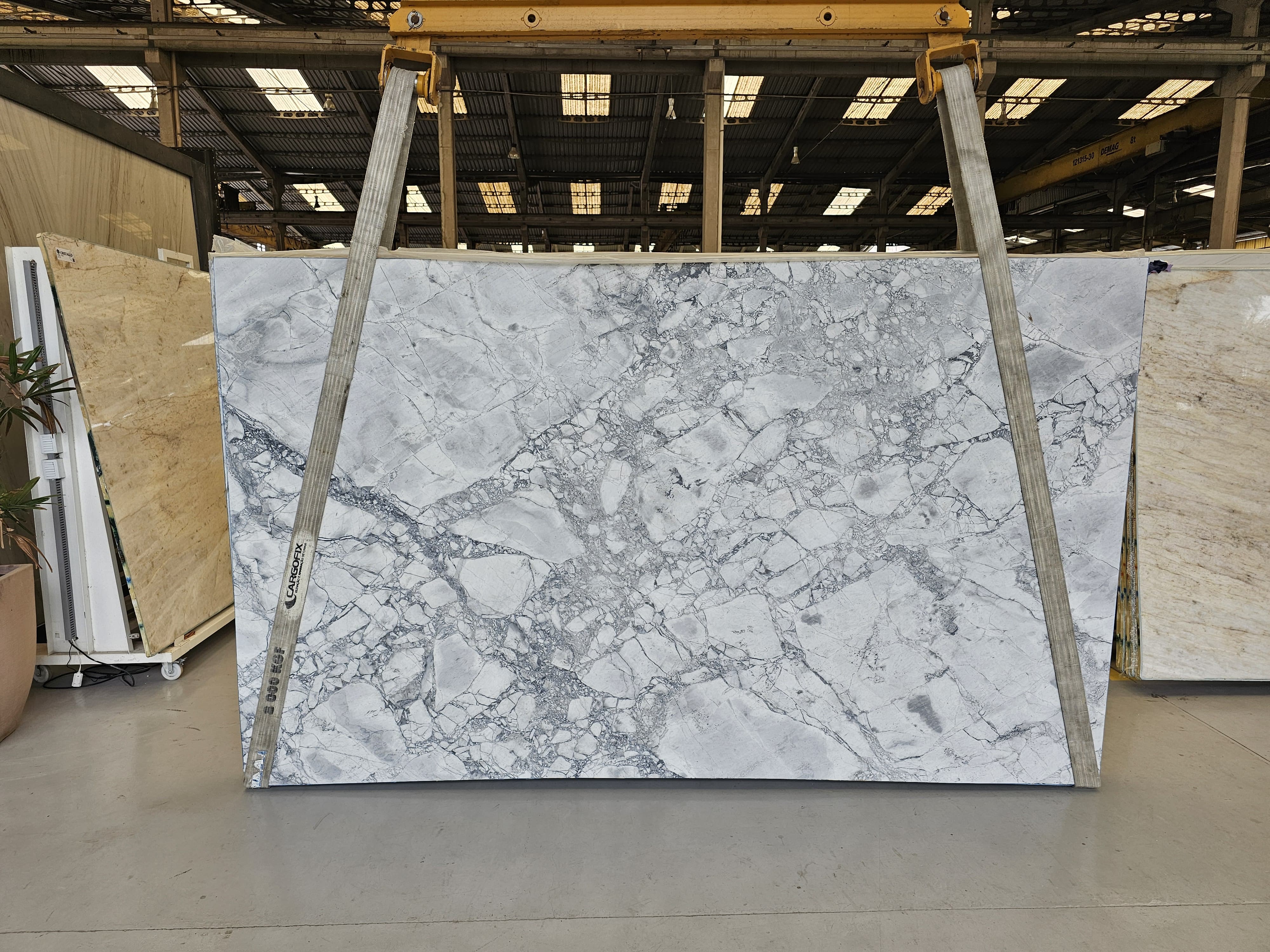
Dolomite is a natural stone that often presents the soft grey movement and light palette sought for contemporary kitchens.

How does it perform?

It offers a useful middle ground between marble and quartzite, but remains calcareous and is not immune to acid etching.

What can I view at StoneMart?

Our range includes Super White Dolomite and other slabs suitable for benchtops, islands, splashbacks and vanities.

View dolomite range →
Natural stone slab displayed in the StoneMart showroom
05 · Quiet natural texture

Limestone Natural Stone
Benchtops Melbourne

Soft tonal movement and understated character for calm, tactile interiors.

What is limestone?

Limestone is a sedimentary natural stone valued for its subtle texture, warm neutral colours and softly layered appearance.

Can limestone be used for a benchtop?

Suitable dense limestones can be considered for benchtops, islands and vanities. As a calcareous stone, limestone requires appropriate sealing and careful use around acids and spills.

What can I view at StoneMart?

Explore Tundra Grey and other limestone selections for kitchens, bathrooms, wall features and complementary interior surfaces.

View limestone range →
Ideas for your project

Kitchen inspiration

See how colour, movement, finish and joinery work together before deciding which slab feels right for your space.

Follow StoneMart

@stonemart.au

New stone arrivals, finished spaces and behind-the-scenes details from our Melbourne showroom.

View Instagram →
Light natural stone kitchen shared by StoneMartBold natural stone kitchen shared by StoneMartNatural stone benchtop detail shared by StoneMartWarm natural stone kitchen shared by StoneMart
Choose natural stone from the actual piece

Touch, compare and choose your slab.

Samples cannot show the full-scale colour and movement that will appear across an island or splashback. Visit StoneMart to compare individual slabs and finishes in person.

6 / 25–35 Narre Warren–Cranbourne Rd
Narre Warren VIC 3805
Natural stone slab displayed at the StoneMart Narre Warren showroom
Useful answers

Stone benchtop FAQs

Which stone is best for a kitchen benchtop?

There is no single best stone. Granite and quartzite are generally more hard-wearing; marble, dolomite and limestone are often chosen for their appearance and require more care. The right answer depends on how the kitchen is used and how you feel about natural patina.

Do natural stone benchtops need sealing?

Most natural stone benefits from a suitable impregnating sealer, but requirements vary by stone and finish. Sealing improves resistance to staining; it does not make stone stainproof.

Will a marble benchtop etch?

Marble can etch where acids contact the surface. Etching is a dulled mark rather than a stain and is a characteristic of the material. A honed finish generally shows it less than a polished one.

Is quartzite the same as engineered quartz?

No. Quartzite is natural stone quarried from the ground. Engineered quartz is a manufactured material made with crushed minerals and resin.

Can I see the actual slab before buying?

Yes—and for a benchtop, StoneMart recommends it. Viewing the allocated piece is the clearest way to understand how its tone and movement may appear in the finished surface.
Quartzite
Benchtops

Natural movement with resilience.

View range

Marble
Benchtops

Timeless depth and veining.

View range

Granite
Benchtops

Dense and practical.

View range

Dolomite
Benchtops

A pale, balanced alternative.

View range

Limestone
Benchtops

Subtle texture and quiet tones.

View range