
Search products
By name, colour, finish or material — “Bianco Carrara”, “travertine”, “honed”.
Natural stone has shaped homes, palaces, and monuments for thousands of years — and no two stones are alike. Each type carries its own origin story, character, and ideal use. Whether you're renovating a kitchen or paving a driveway, understanding your options is the first step to making the right choice. Here's your complete guide.
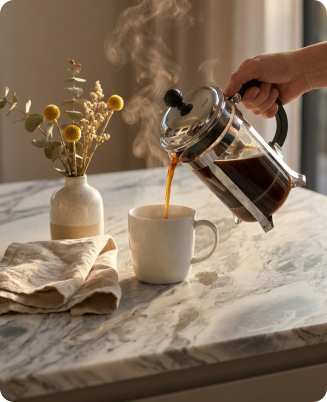
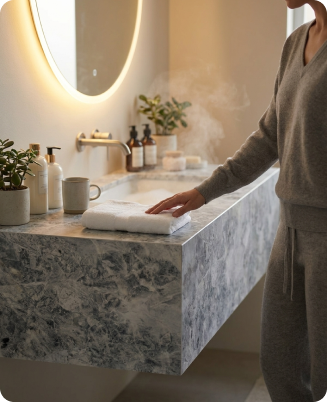
Marble has long been the building block of royalty, used in palaces, monuments, and temples around the world. Its elegance and beauty are just as alluring today, making it popular in homes that aren't shy about showing off.
Perfect for kitchen countertops, bathrooms, or entryways, marble adds a sophistication you can't quite get from other types of natural stone.
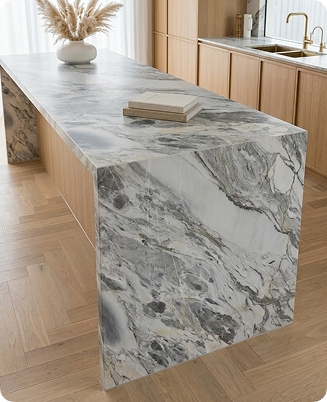
Marble is a pattern-oriented stone, meaning it typically has a white, black, or grey background with a unique patterned heart running through the middle.
Current trends include Bianco Carrara, Tundra Grey, and Calacatta. You might also come across Super White — but that's actually a quartzite. It might be just as pretty as marble, but it isn't quite as strong.
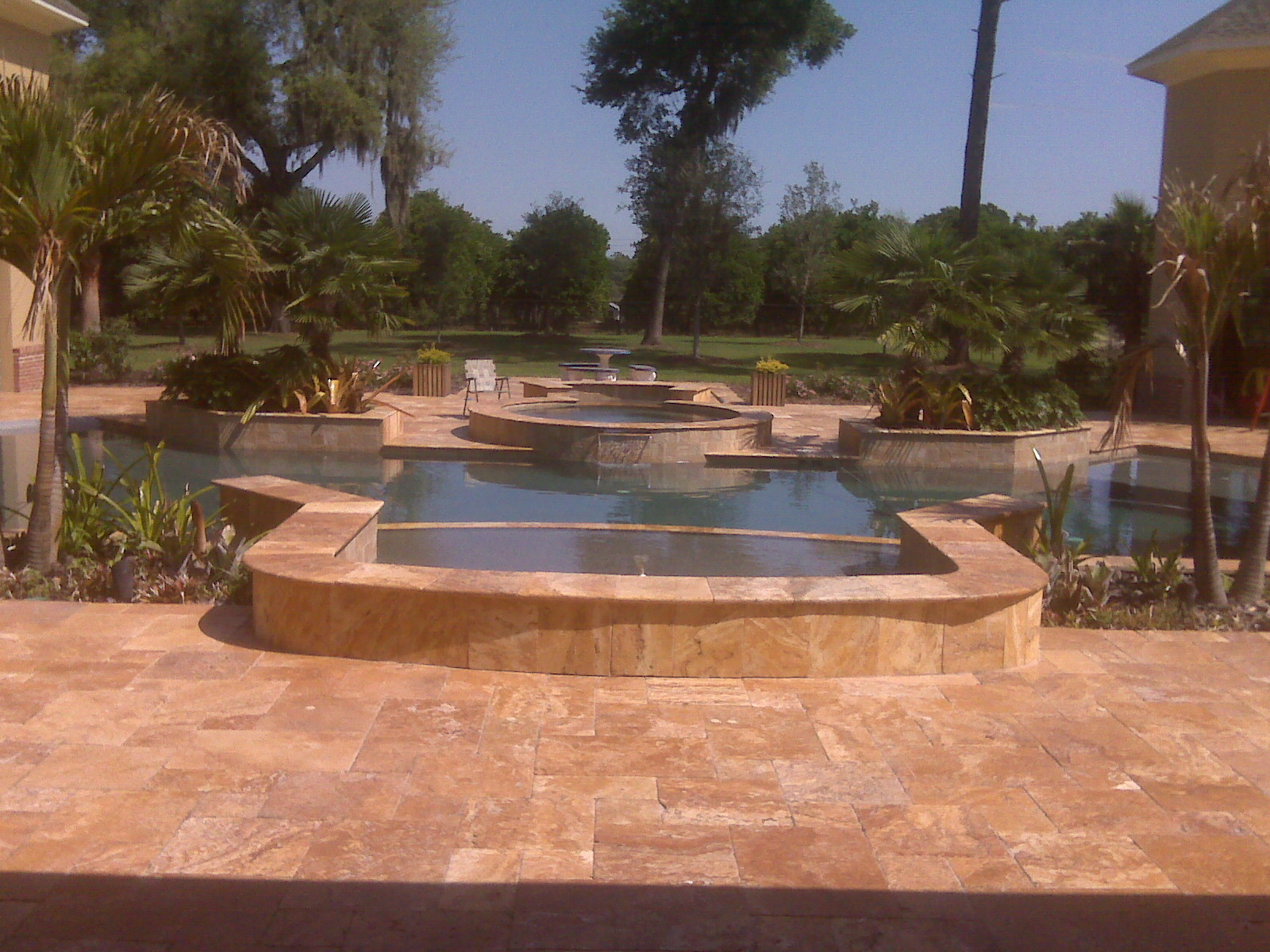
Travertine forms near hot springs and limestone caves, created as limestone absorbs calcium carbonate from the surrounding environment. Its durability and impact resistance make it perfect for heavy-use surfaces like kitchen and bathroom floors.
Travertine is available in many different shades, cuts, and textures, each streaked with a unique and exotic burst of colour. The size, colour, and type of pattern depend on how the stone is cut.
With a vein cut, you cut against the natural grain of the stone, showcasing the banding and linear lines of the veining — a technique that yields dramatic explosions of colour. With a cross-cut, the cut line runs along the grain, revealing flowery, circular, and cloud-burst-like patterns.
If you're a budding paleontologist, you might be interested to know that this natural stone is created from the fossilized shells of ancient sea creatures. Limestone is a sedimentary rock made up of calcite and the shells and skeletons of invertebrates.
Despite its macabre origin story, limestone's unique texture, light colour, and impressive strength make it highly sought after in construction and design — especially Fossil Grey limestone. Its majestic appearance makes it a popular material for floors, walls, decorative trim, and veneers.
Granite is an intrusive igneous rock — in other words, a type of natural stone formed when volcanic lava pushes up between two rocks and then cools. As a building material, granite is prized for its impressive durability, sandy texture, and strong resistance to dirt. You'll find it in cathedrals, bridges, and other public buildings.
In home construction and decoration, granite is a great choice for paving, tiles, and kitchen countertops. With an expert polish and finish, even coarse granite can feel as smooth as glass.
Quartzite is a metamorphic stone, meaning it was once a completely different type of rock, transformed by intense heat and pressure. In quartzite's case, it was once sandstone — but is now a versatile and incredibly strong natural stone.
Quartzite is ideal for covering walls, roofing tiles, flooring, stair steps, and, as always, the kitchen. Naturally water-resistant and stainproof, it's a favourite among designers thanks to its high strength, extreme toughness, and diverse range of colours.
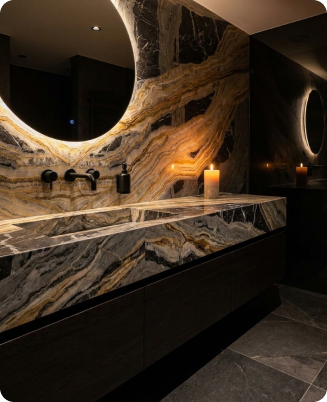
Onyx has to be one of the most curious and mystical of the natural stones. A type of layered quartz, onyx forms through the accumulation of silicates, minerals, and hot volcanic gases. Along with some types of marble, onyx is the only natural stone that can be translucent.
This natural stone is ideal for flooring and interior walls, giving a stunning signature look to any home or office. With a range of beige, cream, white, and pastel tones, onyx completes any luxury look.
Once used as a way to recycle old stone offcuts, terrazzo — or Ceppo di Gré — is a rare natural stone quarried from the Lombardy region in Northern Italy. It's made of broken fragments of marble, quartz, granite, glass, and other minerals cemented together by a fine-grained matrix.
Widely used as flooring in bathrooms and high-traffic areas like commercial paving, terrazzo is popular for its durable, stain-resistant texture. It offers a budget-friendly solution while still delivering an on-trend luxury finish.
Dolomite offers the exquisite look of marble at a fraction of the cost. A sedimentary stone, dolomite formed when limestone was altered by magnesium and calcium-rich groundwater.
Sharing similar qualities to limestone, dolomite boasts some outstanding features, including high durability, easy cleaning, light pastel colours, and uniform faces. Many dolomite slabs feature attractive, vivid veins that form a beautiful contrast against darker surfaces.
Even harder than marble and just as opulent when polished, dolomite is the interior designer's choice for stylish natural stone.
What is bluestone? You can be forgiven for not knowing, as bluestone actually represents more than twenty different rock varieties. While it's most common in walkways and pathways, the durability of this natural stone makes it a great choice for steps, driveways, and other paving projects.
Ever versatile, the beautiful texture and colours of bluestone make it suitable for both indoor and outdoor use.
The surface of natural stone can be finished in many ways, including polishing, honing, flaming, antiquing, or tumbling. The finish is chosen according to the colour and characteristics of the stone. From a rough, textured, non-slip floor tile to a high-gloss wall tile, you'd never guess they all began as the same stone.
There are several natural stone formats to meet the needs of different applications.
Pavers
Rectangular stones suitable for paving. Travertine and limestone are the best choice for pavements thanks to their hardness and resilience. Rectangular and square shapes are perfect for the French Pattern (Opus Romain), while the Opus Incertum layout style works well with different, irregular sizes of natural stone pavers.
Tile
Rectangular and square natural stone tiles are perfect for covering floors and walls, and are available in various sizes, cuts, and finishes.
Slabs
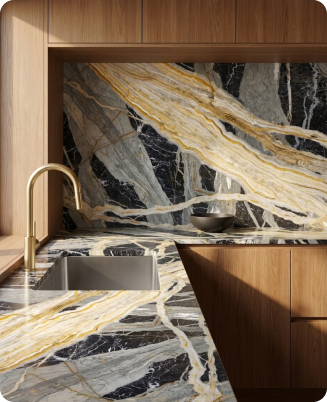
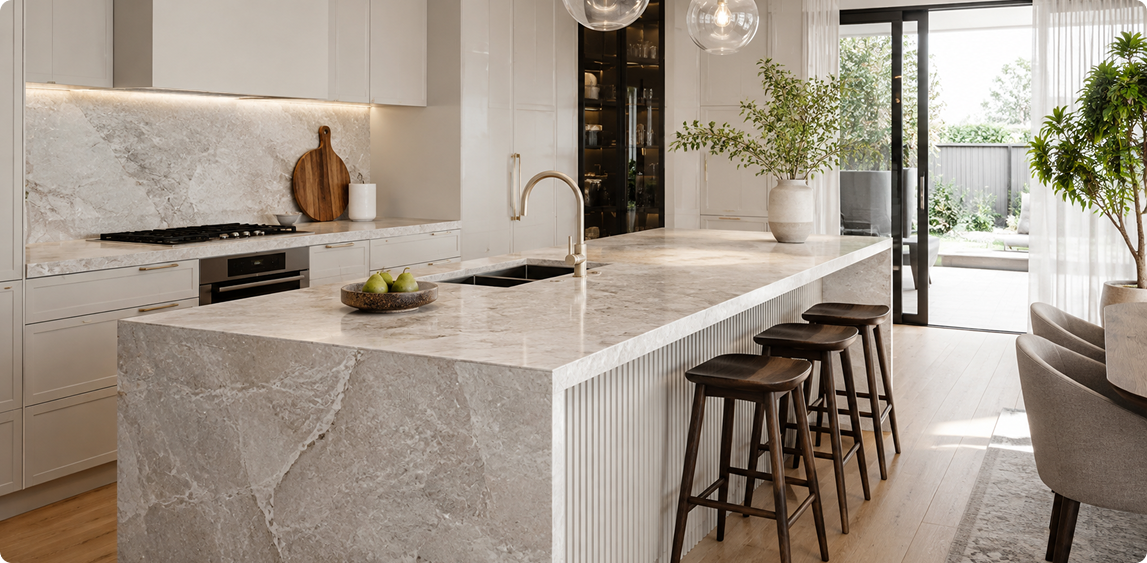
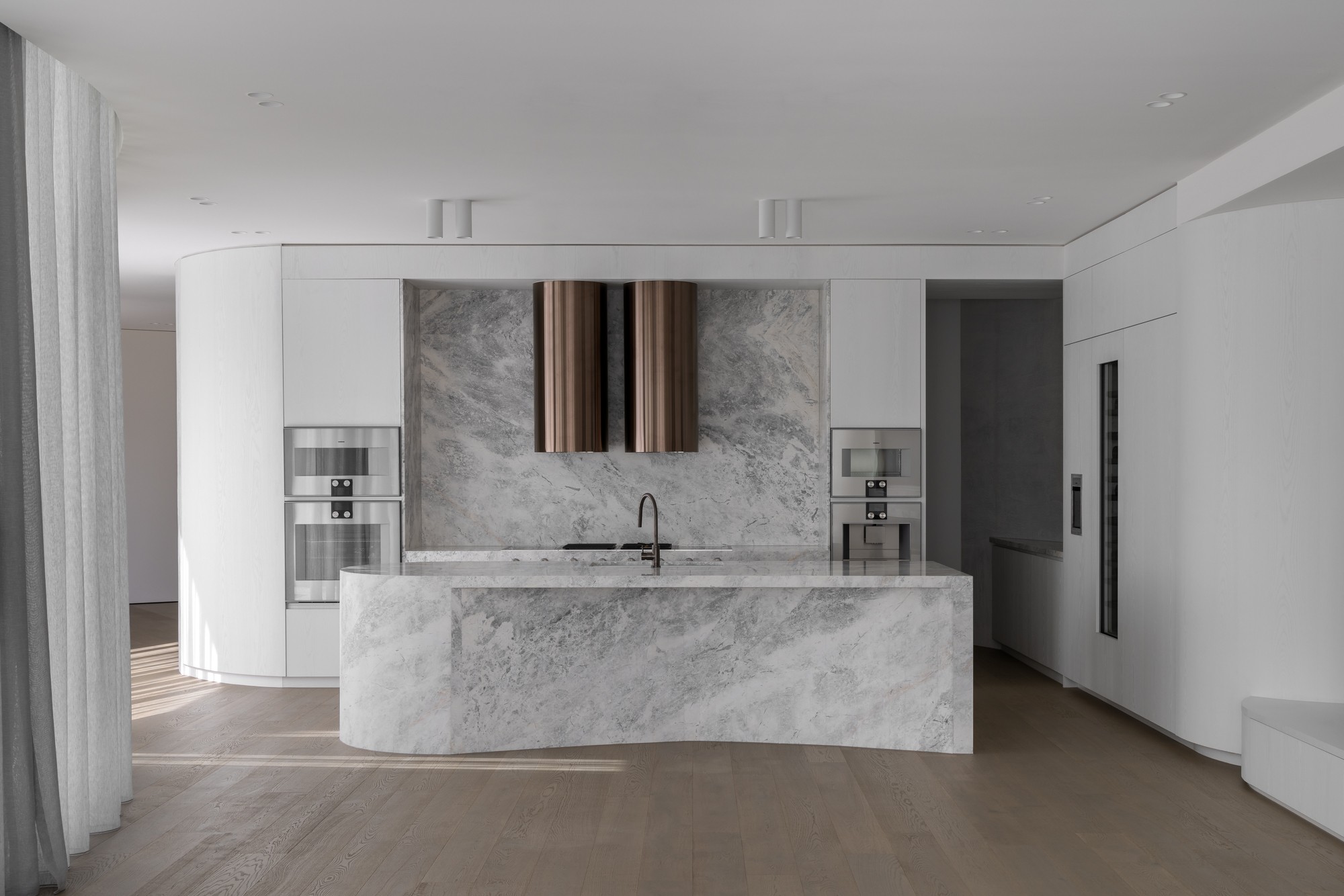
Recent design trends lean towards solid slabs for kitchen countertops. A rectangular piece of natural stone in your chosen finish can add class and elegance to any kitchen.
Showcase
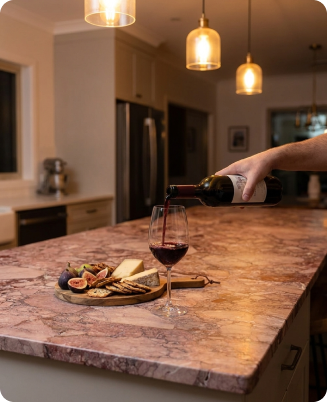
Explore stunning interiors and exteriors showcasing premium marble, granite, travertine, limestone, and porcelain in beautifully designed spaces