
Search products
By name, colour, finish or material — “Bianco Carrara”, “travertine”, “honed”.
Bianco Carrara marble can feel equally at home in a traditional bathroom and a kitchen with simple, contemporary cabinetry. Its pale background and grey veining bring detail to a room without demanding a bold colour scheme. That leaves plenty of room to work with timber, painted joinery, metal and other finishes.
Its appeal goes beyond the familiar white-and-grey appearance. Carrara offers several ways to introduce natural stone into an interior, from a broad kitchen island to a small vanity or tiled wall. The result depends on the particular stone, its finish and how it is used. Understanding those choices helps you decide whether it belongs in your home.
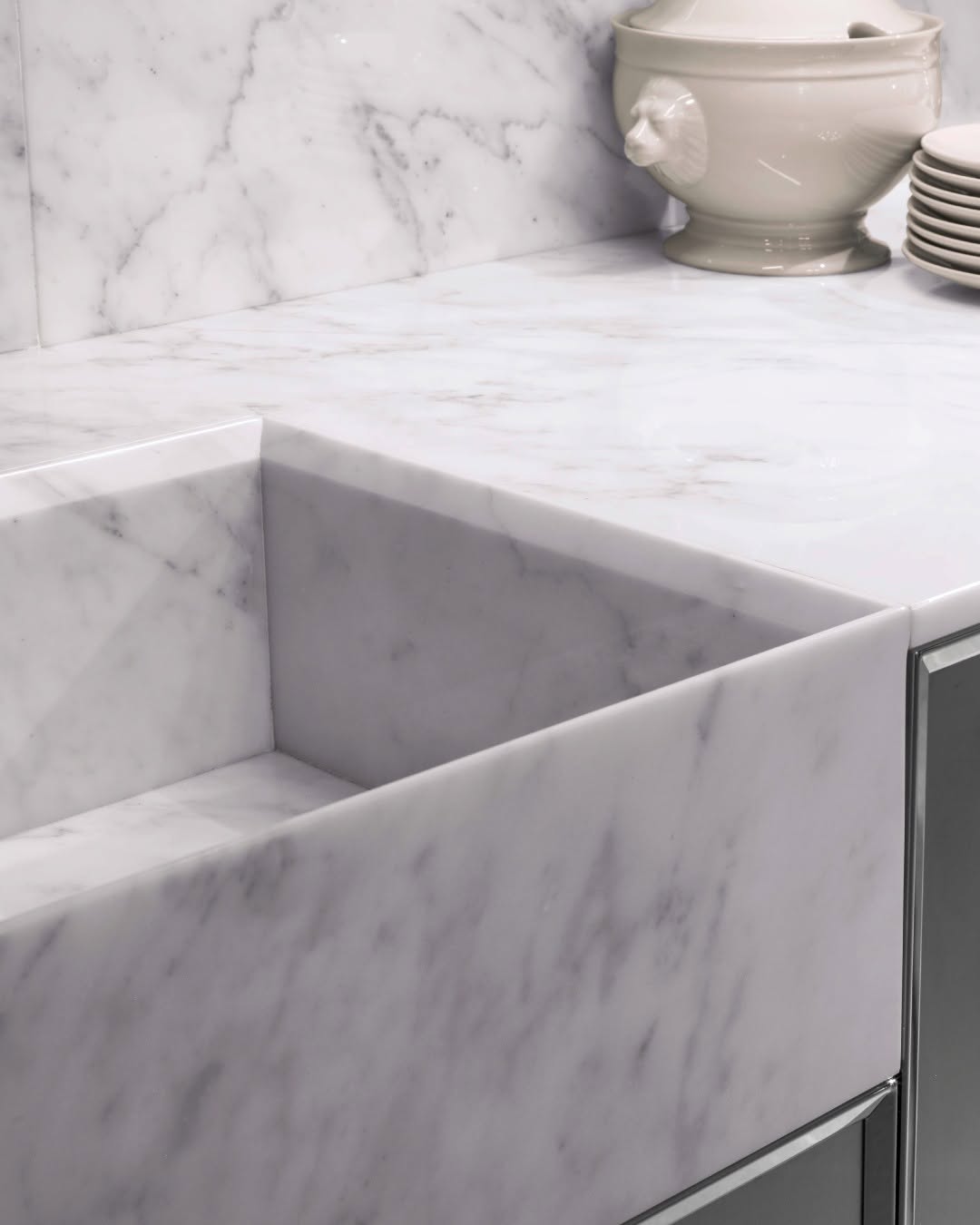
Bianco Carrara benchtop and splashback
Bianco Carrara is a natural marble associated with the Carrara area of Tuscany, Italy. It is recognised for a white-to-grey background crossed by grey veins, although the balance between the background and markings varies from piece to piece.
Some selections appear quiet from across the room, with fine veins that become more noticeable up close. Others have stronger grey movement or a more clouded background. Neither appearance should be judged from the name alone. The actual piece is what you will live with.
This variation also explains why a small sample cannot represent an entire island, wall or floor. Use a sample to develop your palette, then look at the proposed slabs or batch before making the final selection.
Marble quarrying around Carrara reaches back to Roman times, and the region later became closely associated with Renaissance sculpture and Michelangelo. That history helps explain why pale marble still feels familiar in interiors with classical proportions and architectural detailing.
You do not need a period home to make use of that association. A Carrara vanity beneath a plain mirror, or a simple stone table beside contemporary furniture, can introduce the material without reproducing a historical style. The stone provides the detail; the rest of the room can remain quite restrained.
The background colour deserves as much attention as the veins. A grey-white marble may look quite different beside a warm white cupboard door than it does against a bright, cool white paint sample.
Timber is a useful starting point when building a palette around Carrara. Its warmth contrasts with the stone’s pale tones, while the grain and marble veining offer different kinds of movement. Brass or bronze can add warmth too. Black tapware, handles or furniture frames create a sharper outline against the light surface.
Keep the complete room in mind. Where the marble has a busy pattern, quieter cabinetry or wall finishes may give it more space. A softer piece can sit comfortably alongside stronger colours, textured fabrics or more detailed joinery. These are design choices to test with actual samples, rather than rules every Carrara interior needs to follow.
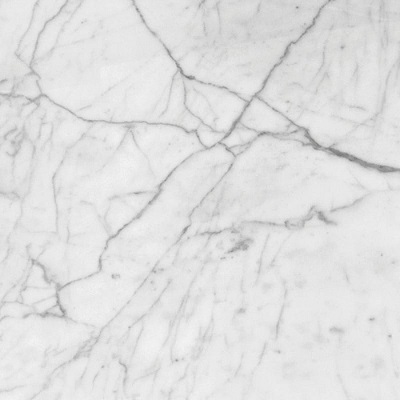
The natural detail of Bianco Carrara
A polished finish reflects more light and can make the surface an obvious feature, particularly across a vanity or table top. Honed marble has a lower sheen and gives a less reflective appearance. Compare the two under the lighting planned for the room, as reflections can change how clearly the veining reads.
The finish also affects how surface marks are seen. It does not remove marble’s need for appropriate care. Honing should not be treated as protection against etching, and the word honed alone does not establish slip resistance for a floor.
StoneMart’s Bianco Carrara Honed slab and Bianco Carrara Extra slab are separate listings, both specifying a honed finish. If you prefer a different finish, confirm the options for the selected product before ordering.
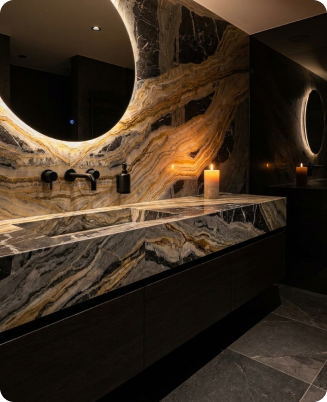
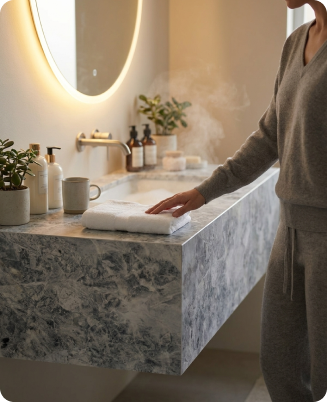
Carrara can bring detail to a bathroom while keeping the overall palette light. On a vanity, the placement of the basin and tap holes determines how much of the slab remains visible. A vein that looks well positioned on the full slab may disappear into a basin cut-out, so review the proposed layout first.
Tiles offer another way to use the material on walls or suitable floors. You might combine a marble vanity with quieter tiles, or repeat Carrara across several surfaces. Compare the actual products together: the same stone name does not guarantee that slabs, tiles and mosaics will match exactly. Wet-area and flooring suitability should be confirmed for the specific product and installation.
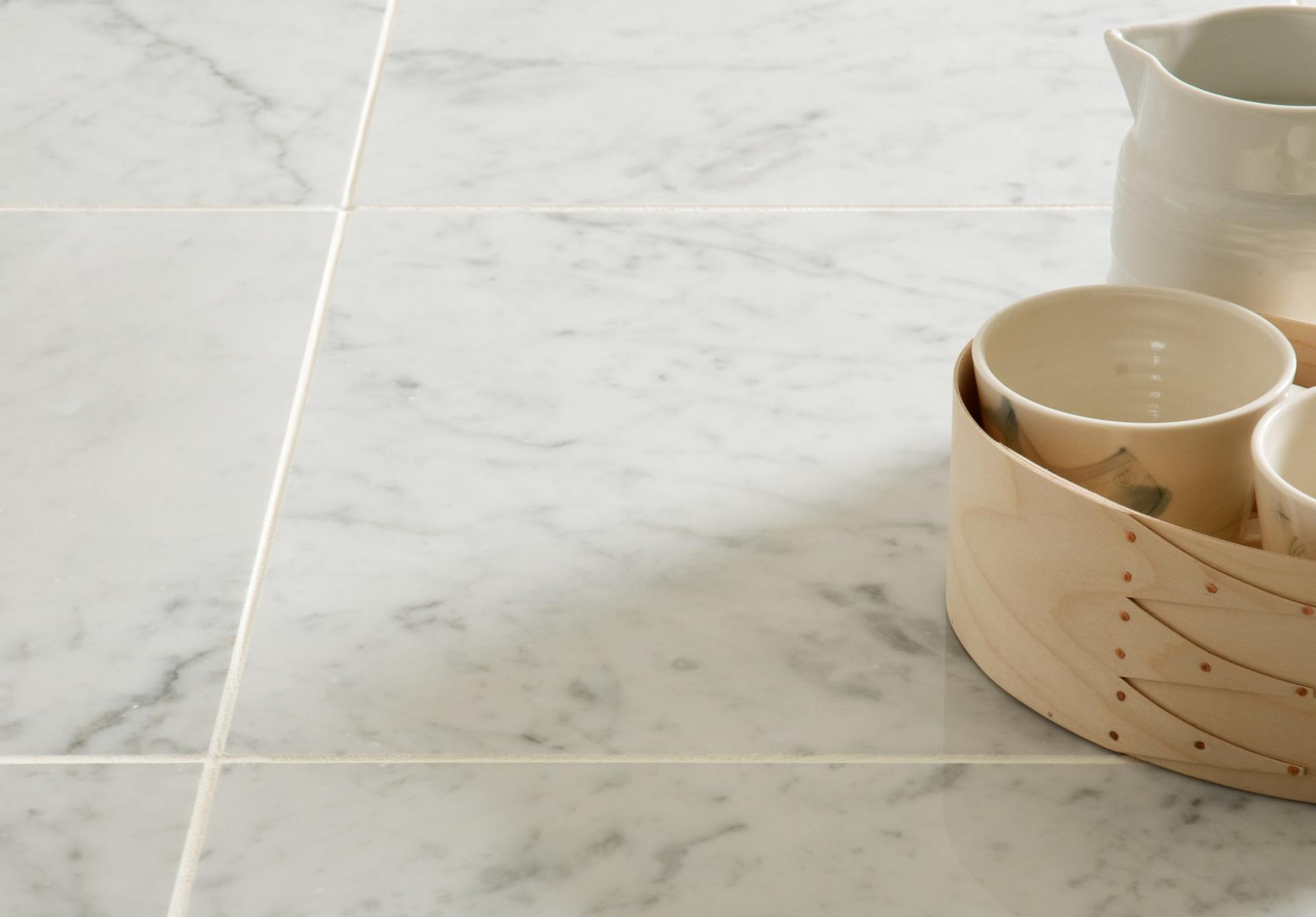
Bianco Carrara tile detail
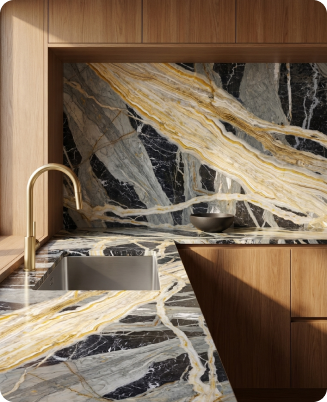
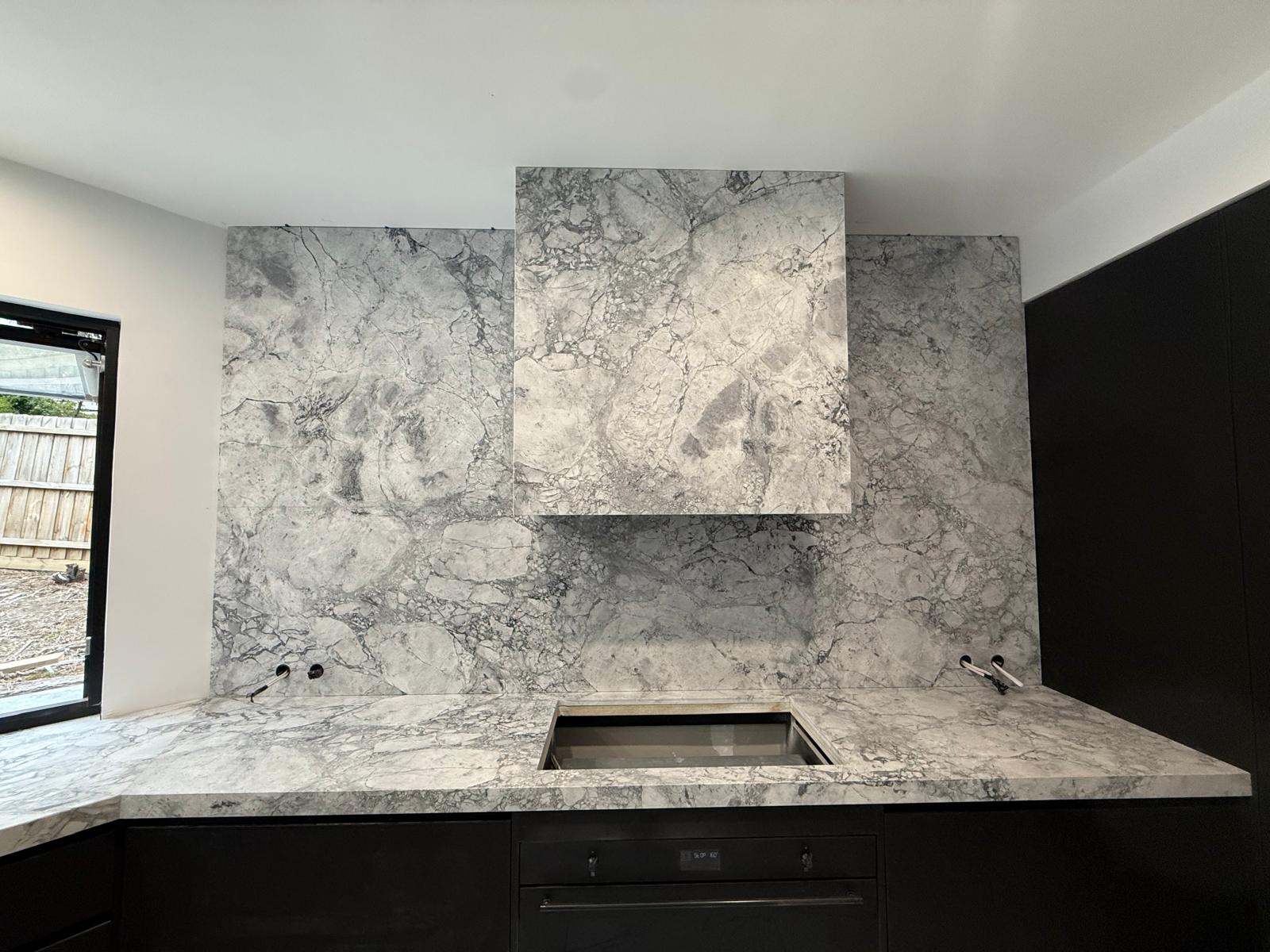
In a kitchen, Carrara’s grey-white tones can work with timber, painted cabinetry or darker accents. A splashback gives a vertical view of the veining; an island lets you appreciate a wider stretch of the stone. Using both calls for some thought about how the pattern moves around the room.
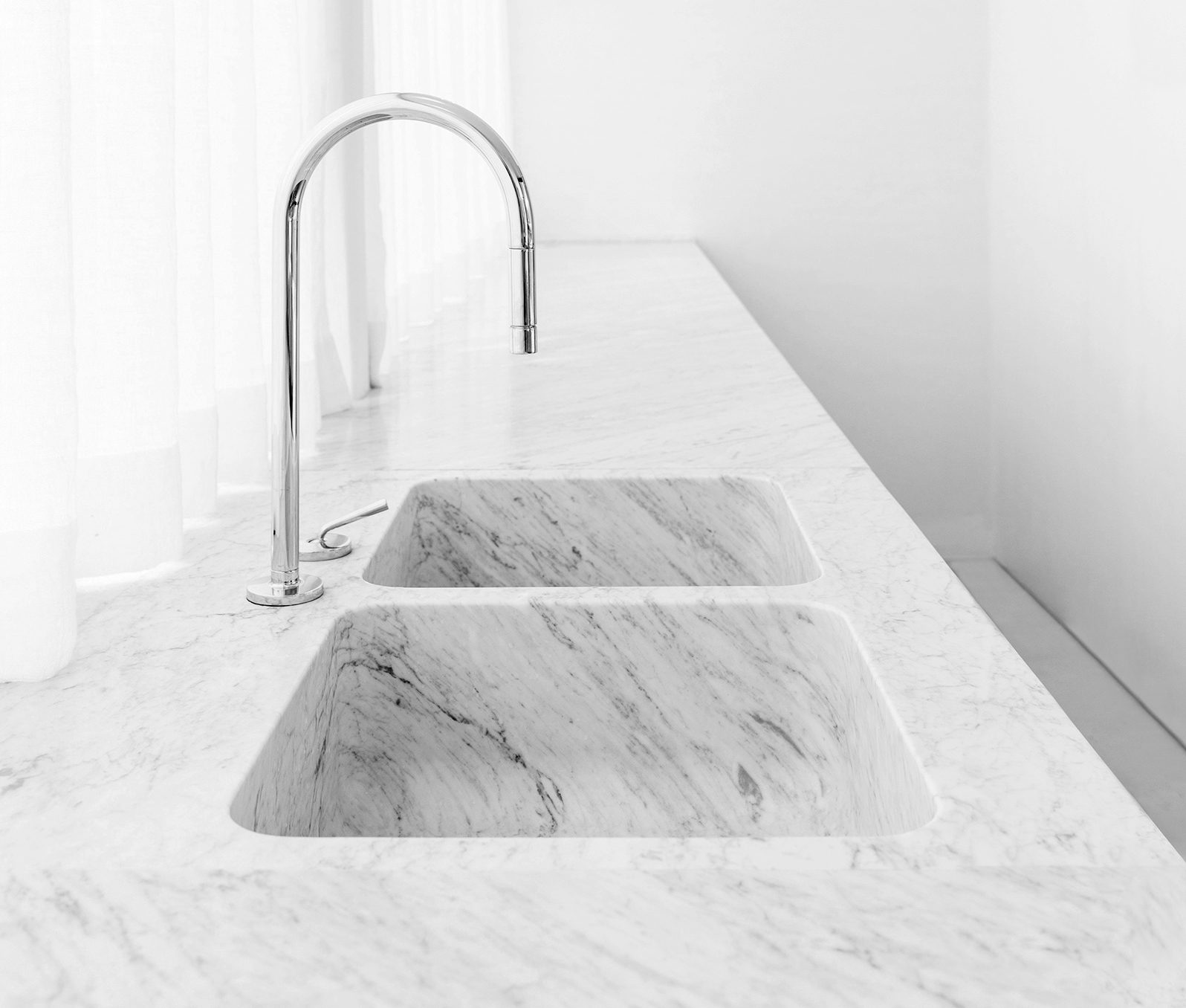
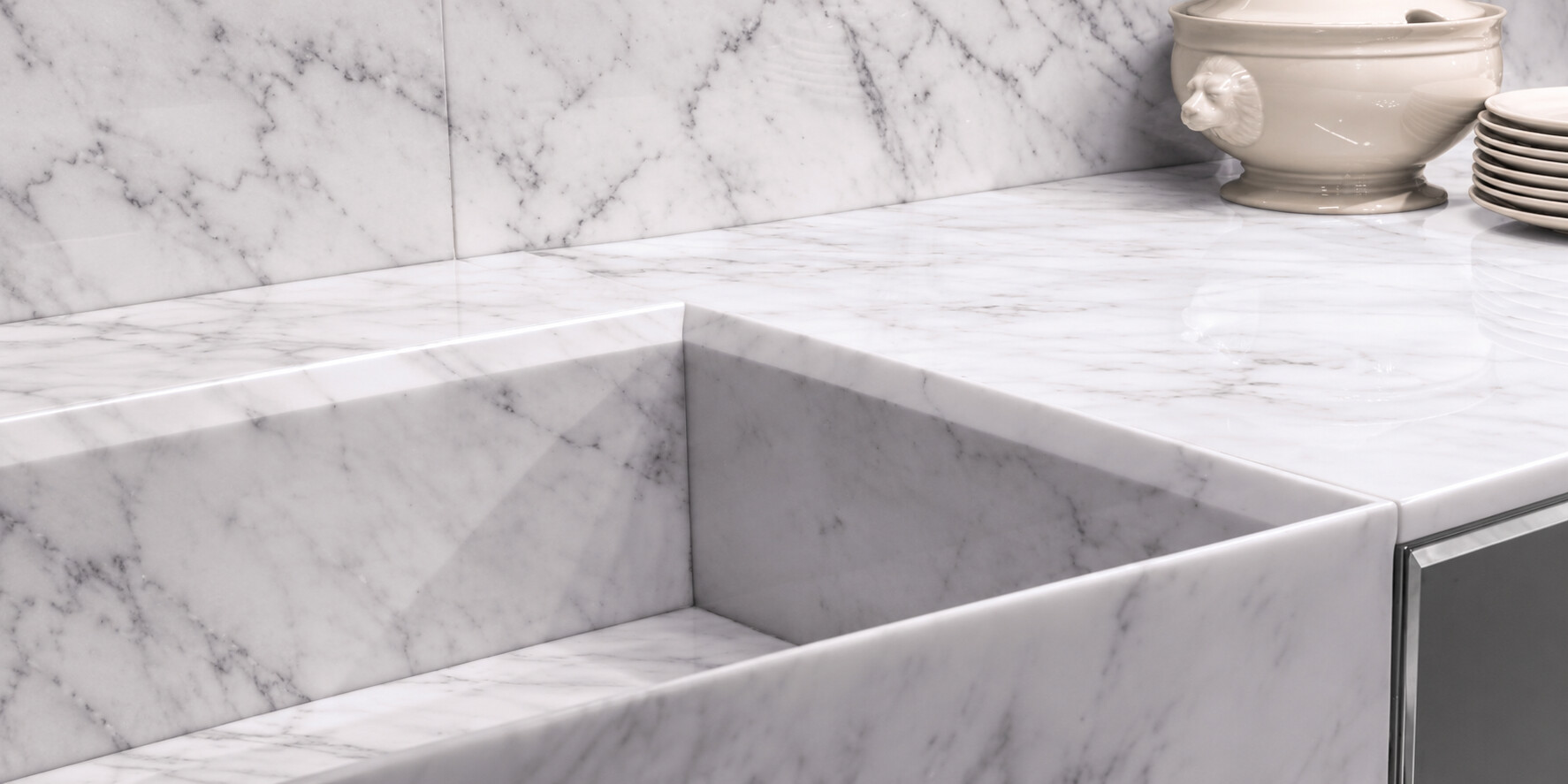
Marble across the benchtop and sink
Marble also asks something of the household. Acidic foods can etch the surface, and everyday use may leave scratches or other marks. If those changes would bother you, consider that before choosing the stone. Our guide to the pros and cons of marble kitchen benchtops covers the practical trade-offs in more detail.
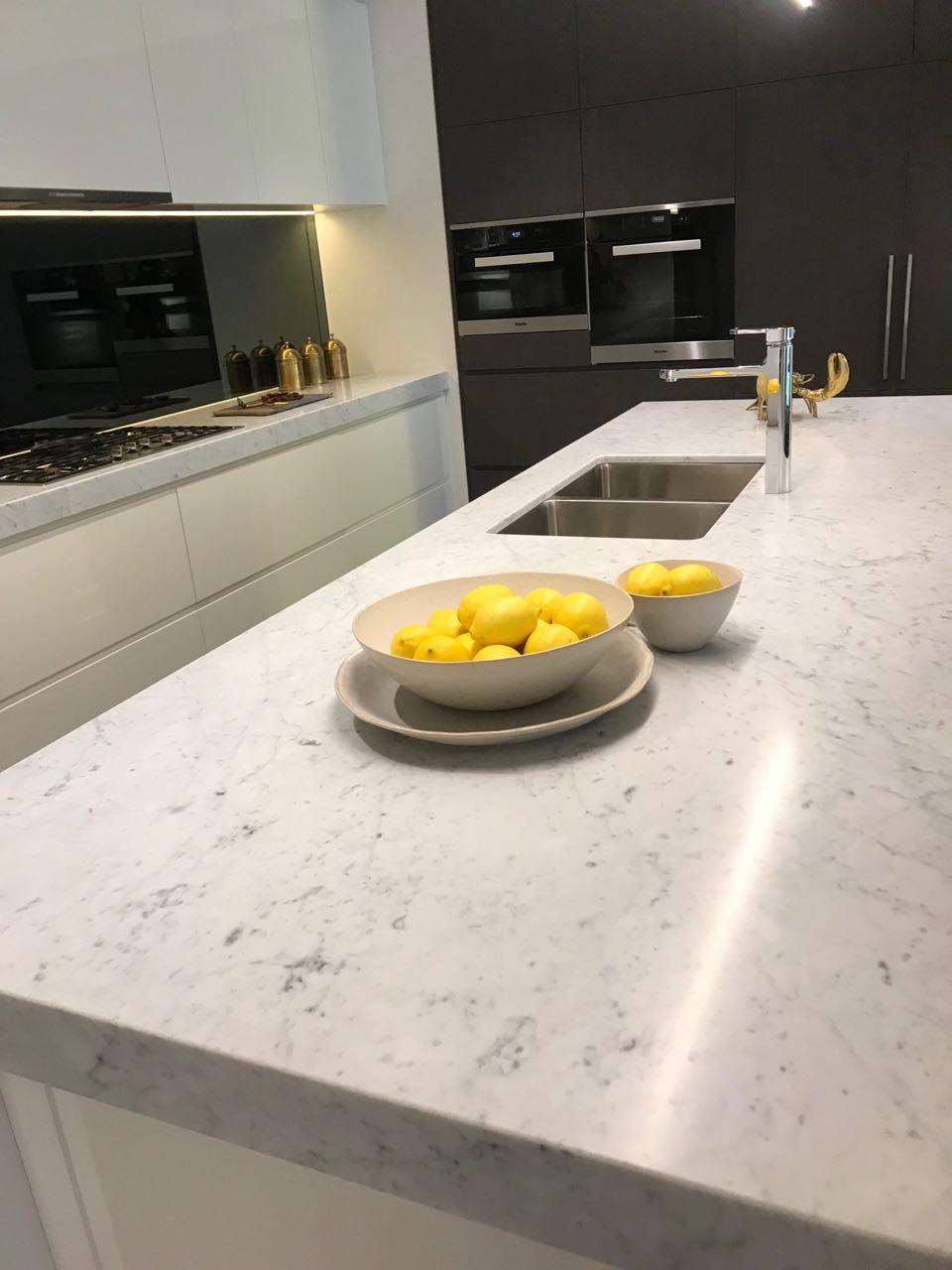
Bianco Carrara in a contemporary kitchen
Across a larger area, Carrara’s background and veining become part of the room’s overall rhythm. Tile size, joint placement and the distribution of stronger markings can matter as much as the individual tile.
View a representative selection from the proposed batch and discuss the layout with your installer. For slabs used vertically, fixing methods, substrate and the weight of the stone also need to be considered. Browse Bianco Carrara tiles as a starting point, then confirm the product information relevant to the application.
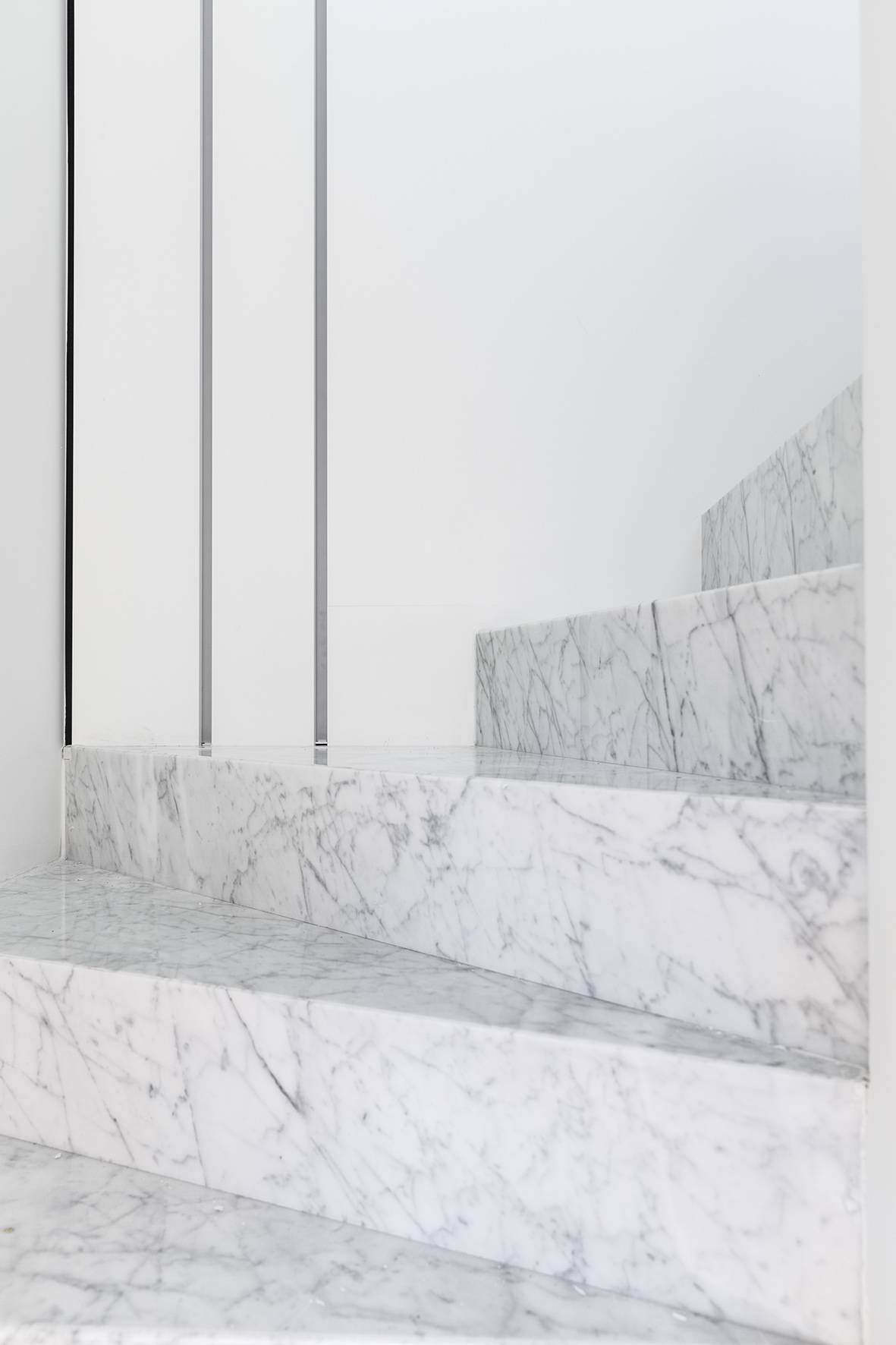
Marble as an architectural feature
A marble fireplace surround can provide a focal point without requiring a strongly coloured stone. A simple surround gives the veining room to show, while a more detailed profile changes the emphasis towards the shape and workmanship.
Suitability must be checked against the fireplace design, appliance requirements and installation details. Marble’s historical use around fireplaces should not be taken as approval for every modern appliance or heat exposure.
A table top, shelf or smaller feature can introduce Carrara into a room where a full stone surface would feel too dominant. The scale of the piece changes the effect: a small top may reveal only a few veins, while a dining table shows much more movement.
Discuss supports, edge details and fabrication with the maker. These details influence both the appearance and the suitability of the finished piece.
In a traditional interior, Carrara can sit beside panelled cabinetry, mouldings and more detailed fittings. For a contemporary room, plain doors and simpler profiles let the stone’s markings provide much of the decoration.
It can also suit a lighter, timber-led scheme or a room with darker metal elements. The useful question is not whether Carrara belongs to one particular style, but whether the selected piece works with the other materials. Bring paint, cabinetry and flooring samples to a viewing so you can make that judgement together.
Marble can provide a long-serving surface, but it is not immune to damage. Scratches, chips, stains and etching are all considerations, especially on frequently used surfaces and exposed edges.
Staining and etching are different. A stain involves absorption into the stone; an etch mark is a surface change caused by an acidic substance. An appropriate impregnating sealer can help resist staining, but it does not prevent acid etching or make marble stain-proof.
Use a suitable neutral stone cleaner, blot spills promptly and protect working surfaces with chopping boards, coasters and trivets. Ask for a sealing and maintenance plan relevant to the selected stone and finish. There is no single resealing schedule that should be assumed for every project.
Carrara’s appearance makes it a useful material to include when comparing white marble options. Whether it offers better value for your project depends on the current stone selection and the complete scope of work, rather than the material name alone.
Compare quotations using the same drawings. Slab quantities, usable dimensions, cutting layout, edge profiles, delivery and installation can all affect the total. A lower slab price may be offset by a design that needs more material or more complicated fabrication.
Ask for a current quote rather than relying on a general claim that one marble is always cheaper than another. The comparison becomes more useful once the actual slabs and required quantities are known.
Carrara will not suit every expectation. A busy kitchen may expose it to acids and spills often, while a highly polished surface can make changes in reflection more noticeable. Natural variation also means replacement pieces or later additions may not look the same as the original selection.
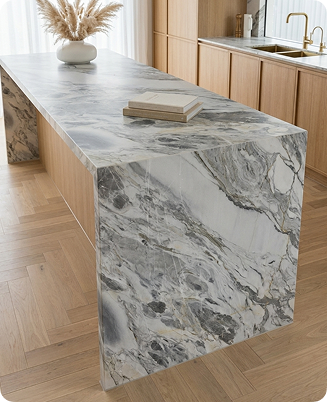
Choosing several slabs together helps you assess their relationship, but it does not make them identical. Confirm the available dimensions and review joins, cut-outs and any waterfall panels with your fabricator before committing to a layout.
If you want natural stone and are comfortable with some change through use, those characteristics may be acceptable. If you expect an entirely uniform surface that stays visually unchanged, take more time to compare materials.
Carrara gives you a pale palette with enough natural detail to keep a simple room interesting. It can be the main surface in a kitchen, part of a layered bathroom or a smaller feature among other materials. That range of uses is a good reason to consider it across different projects.
The best result comes from selecting a piece you like and designing around its real characteristics. Full-slab viewing, a considered finish and a sensible layout do more for the finished room than a product name or a photograph alone.
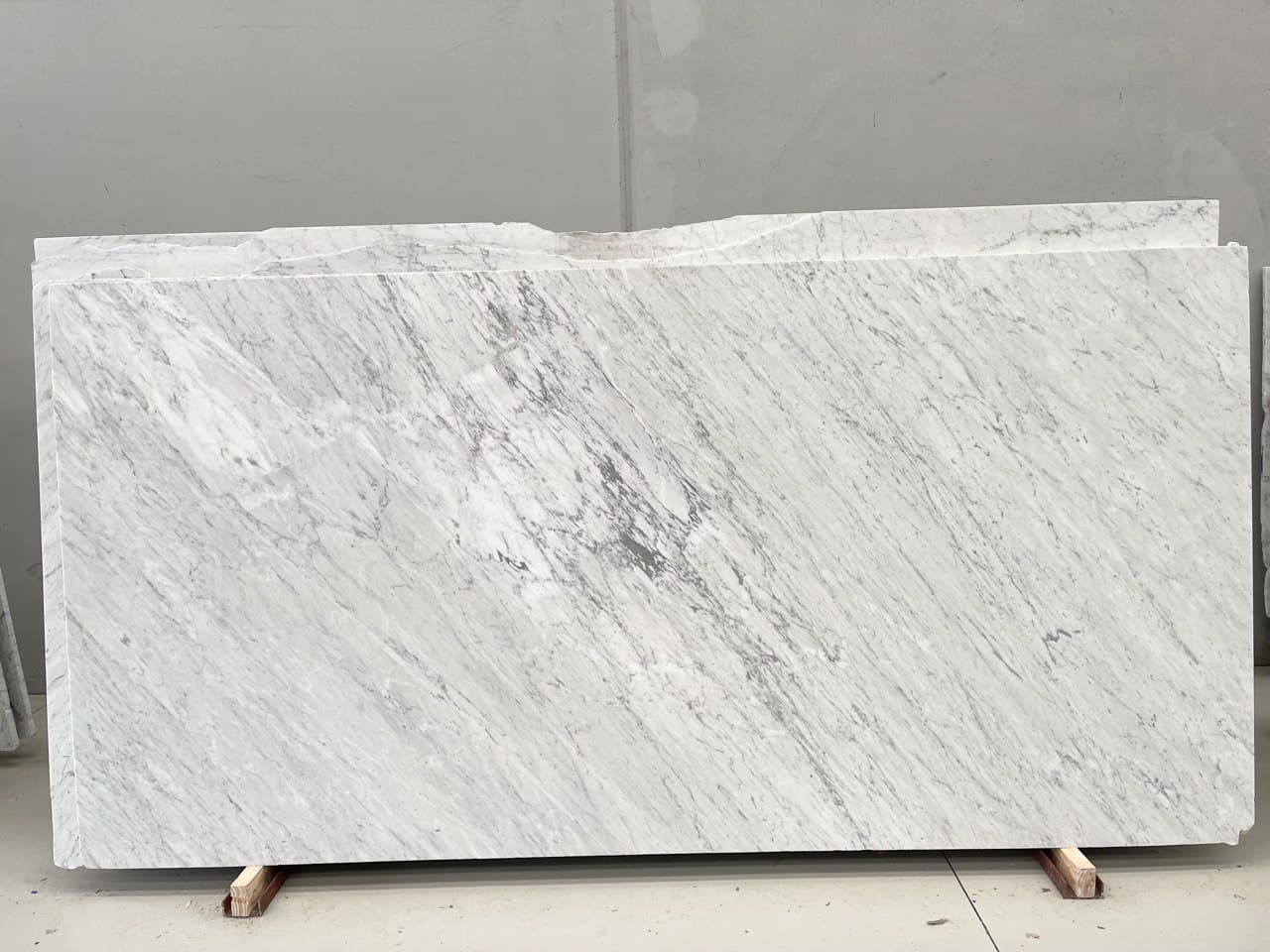
Bianco Carrara marble slabs
Compare StoneMart’s Bianco Carrara Honed and Bianco Carrara Extra slab listings, then contact our team to confirm current availability and viewing arrangements. Bring your plans and material samples so you can discuss the stone in the context of your project.
Book a stone viewing at Unit 6, 25–35 Narre Warren–Cranbourne Road, Narre Warren VIC 3805. You can also call 03 8824 0799 or email info@stonemart.com.au for an enquiry.
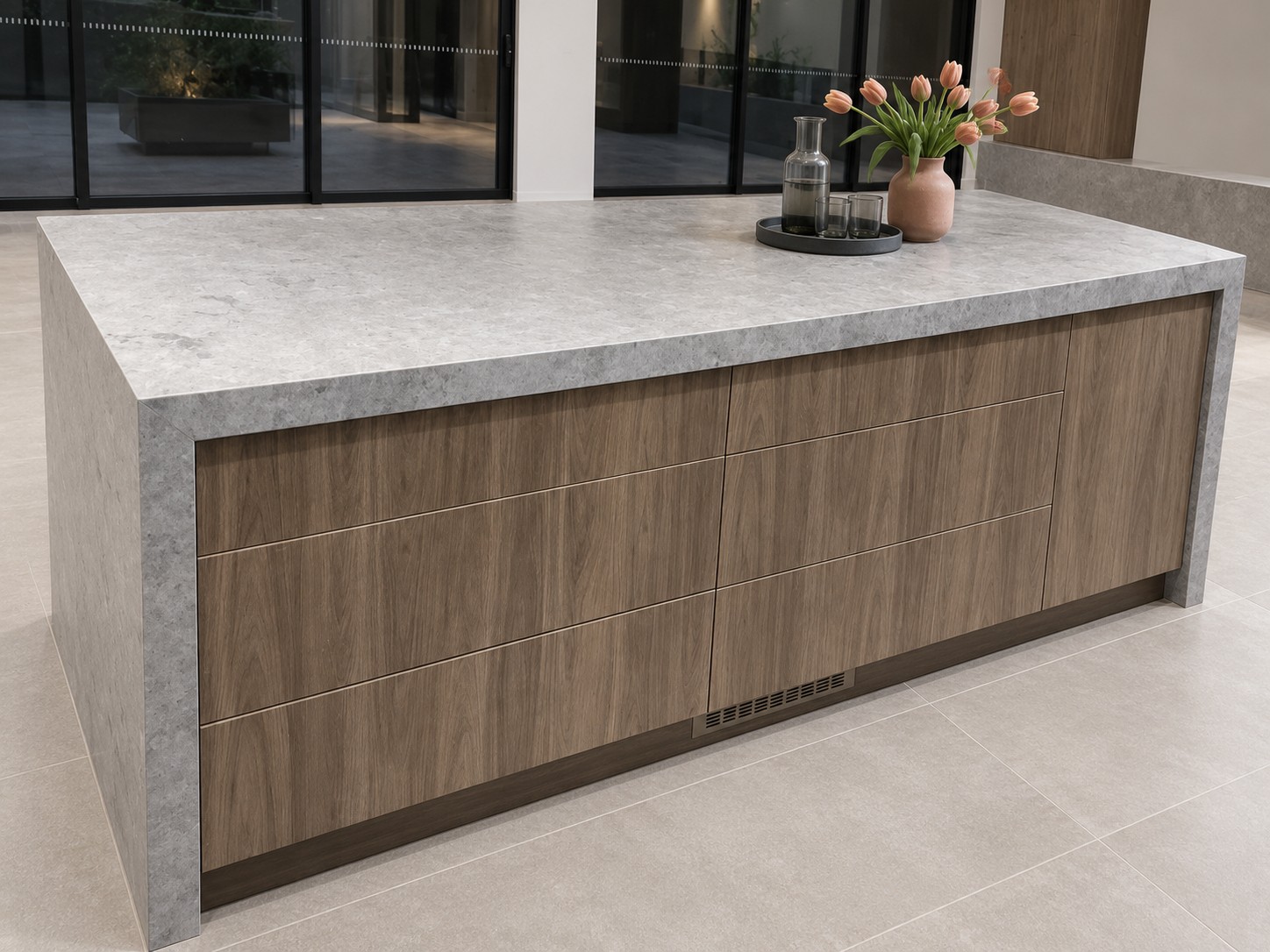
Showcase
Explore stunning interiors and exteriors showcasing premium marble, granite, travertine, limestone, and porcelain in beautifully designed spaces