
Search products
By name, colour, finish or material — “Bianco Carrara”, “travertine”, “honed”.
Choosing the best natural stone for a kitchen benchtop is not as simple as picking the slab that looks best in a showroom.
A kitchen benchtop has to work with the way you actually live. Some households cook heavily every day, while others place greater importance on dramatic veining, colour and architectural impact.
For most kitchens, granite and genuine quartzite are strong choices when durability is a priority, while marble is often chosen for its distinctive appearance and natural patina. Dolomite can offer a useful middle ground for homeowners who want a softer marble-inspired look with different performance characteristics.
There is no single natural stone that is best for every kitchen. The right choice depends on your expectations around maintenance, appearance, staining, heat, scratching and how you want the stone to age over time.
This guide compares four popular natural stones used for kitchen benchtops in Australia: marble, quartzite, granite and dolomite.
If durability and everyday practicality are your main priorities, granite and suitable quartzite are usually among the strongest natural stone choices for kitchen benchtops.
If appearance is your highest priority and you are comfortable with natural patina, marble can create an exceptional kitchen. Dolomite can also be worth considering when you want a lighter, marble-inspired aesthetic.
The key is to choose the individual slab rather than relying only on the name of the stone category.
Natural stone is formed over geological time, so colour, porosity, mineral composition, veining and performance can vary from one material to another.
You can explore StoneMart's natural stone slabs to compare the different materials, patterns and colours currently available.
| Stone | Best For | Durability | Maintenance | Main Consideration |
|---|---|---|---|---|
| Granite | Busy everyday kitchens | Very high | Generally straightforward | Natural patterns can vary significantly |
| Quartzite | Luxury kitchens needing durability | High when correctly identified | May require sealing | Correct stone identification matters |
| Marble | Design-led kitchens | Moderate | Requires more care | Can etch and develop patina |
| Dolomite | Marble-inspired interiors | Generally harder than many marbles | Requires appropriate care | Still sensitive compared with harder stones |
This comparison is only a general guide. The properties of the actual slab and finish should always be discussed before fabrication.
Granite has been used in kitchens for decades because of its combination of hardness, durability and natural variation.
It is particularly suitable for homeowners who use their kitchen heavily and want a natural stone surface that can handle everyday activity.
Granite is one of the harder natural stones commonly used for benchtops.
Its advantages include:
Granite's durability is one reason it remains a popular material for kitchen benchtops and other heavily used surfaces.
Granite does not have one specific appearance.
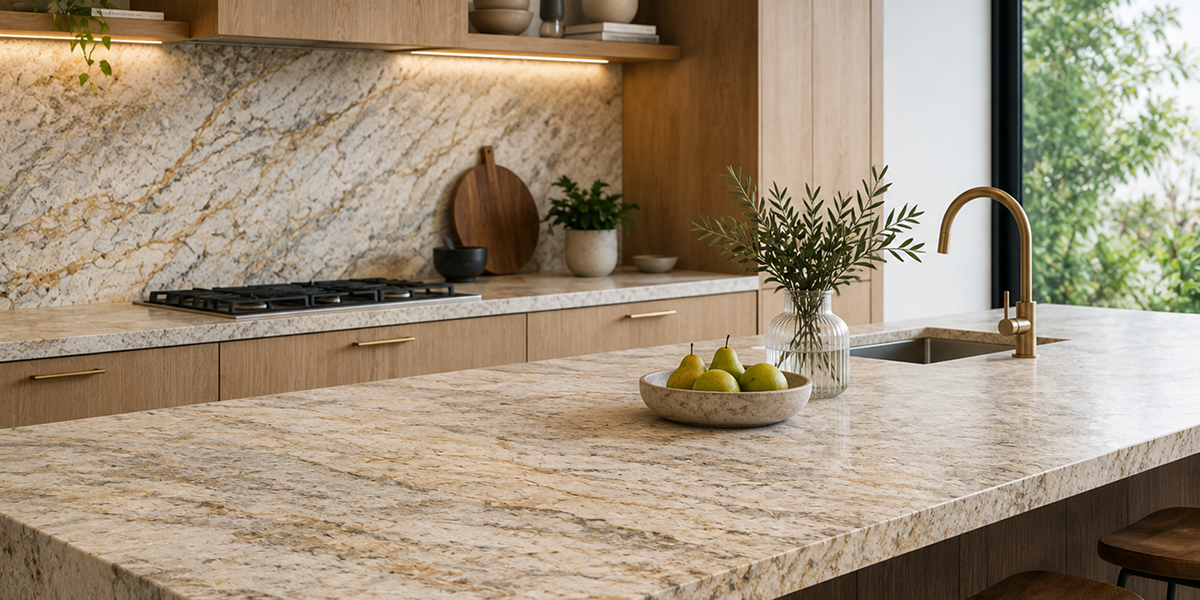
Some slabs are very subtle, while others contain strong mineral patterns, crystals and movement.
If you prefer a soft marble-style design, you may initially find some traditional granites visually busy. However, modern natural stone collections include many more understated options than the heavily speckled granites commonly associated with older kitchens.
For a natural stone kitchen designed around practicality, granite should definitely be on your shortlist.
Quartzite has become increasingly popular with homeowners who love the movement associated with marble but want to explore a harder natural stone.
True quartzite forms when quartz-rich sandstone is transformed by heat and pressure, creating a hard, crystalline natural stone.
Many quartzites combine strong durability with dramatic natural veining.
Depending on the variety, quartzite may offer:
Some of StoneMart's quartzite options include Taj Mahal Quartzite, Patagonia Quartzite and other distinctive natural slabs.
Correct identification is important.
Natural stone names are sometimes used inconsistently across the industry, which is why homeowners may read conflicting reports about how different stones perform.
Rather than assuming every slab labelled quartzite will behave identically, ask about the specific material you are considering.
You should also discuss:
If you are particularly interested in quartzite, StoneMart also has a quartzite collection where you can compare different slabs and colours.
Few materials have the same visual recognition as natural marble.
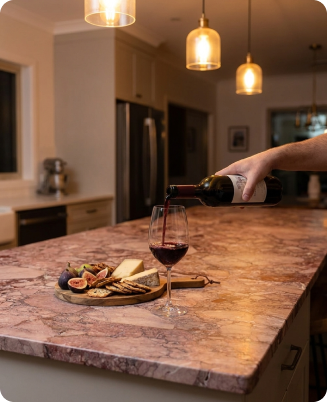
Marble can range from soft white stone with subtle veins to highly expressive slabs containing strong burgundy, grey, green, gold or black movement.
For homeowners prioritising character and natural variation, marble remains one of the most distinctive benchtop materials available.
Marble requires greater acceptance of natural wear than harder stones such as granite.
Marble contains calcite, which can react with acids including lemon juice, vinegar and some foods.
This can produce etching: a change in the sheen or texture of the stone rather than simply a removable surface stain.
For some homeowners this is undesirable. Others deliberately choose marble knowing that it will gradually develop a natural patina.
If you expect your benchtop to remain visually unchanged indefinitely, marble may not suit the way you use your kitchen.
If you value the appearance of genuine stone and are comfortable maintaining it properly, marble can be an exceptional choice.
Dolomite is another natural stone worth considering, particularly for homeowners attracted to the appearance of lighter marble-style slabs.
Some dolomites can be harder than traditional calcite-based marbles, but they should not automatically be treated like granite or quartzite.
They still require suitable care and should be evaluated individually.
Dolomite can offer:
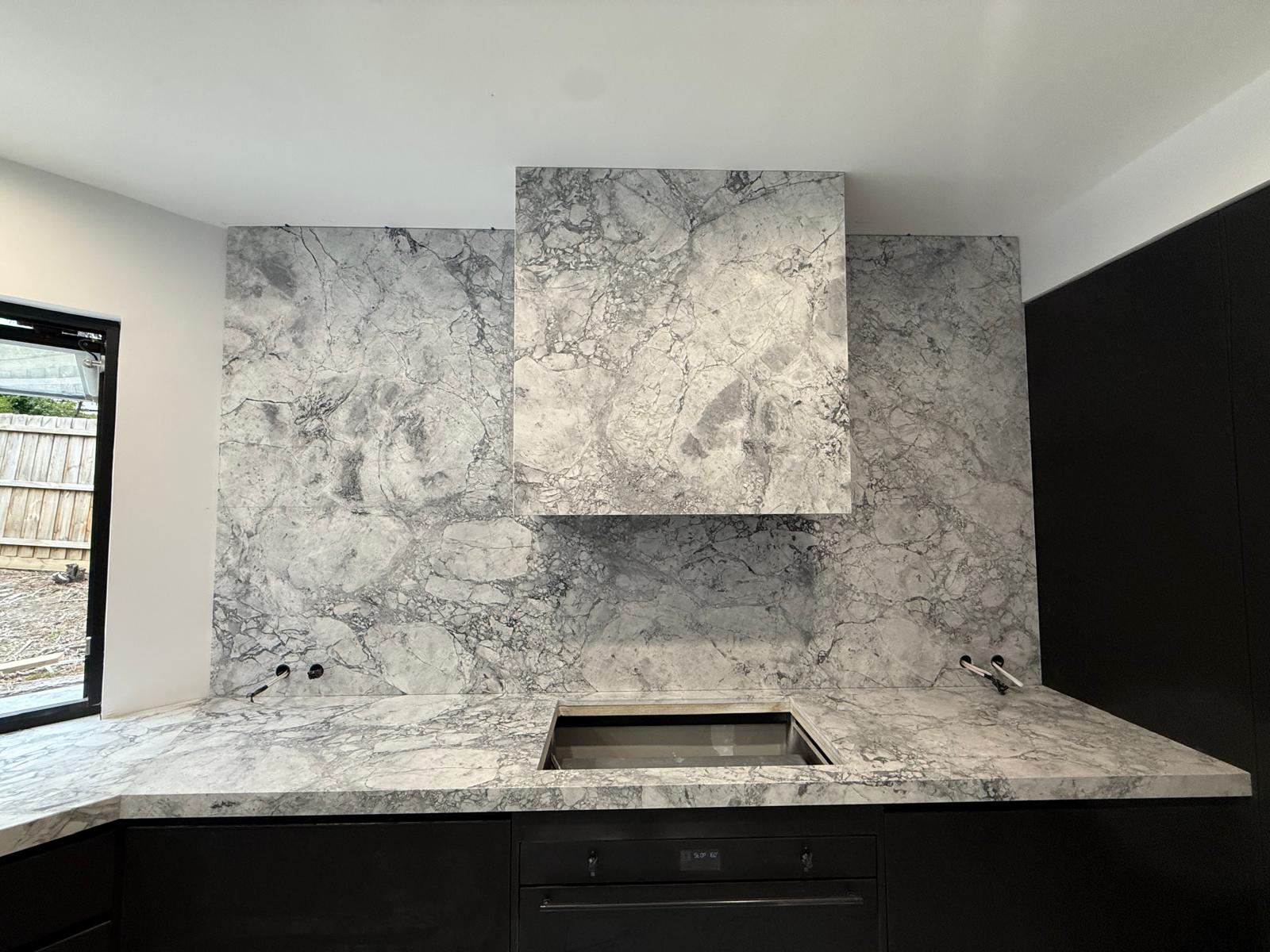
StoneMart carries natural dolomite options such as Super White and other slabs suitable for benchtops and splashbacks.
Granite is an excellent option for homeowners who prioritise durability and straightforward everyday use, while quartzite is particularly attractive when you want a harder natural stone with dramatic or marble-inspired movement.
Both materials can perform very well in kitchens.
The decision often becomes aesthetic.
Granite may appeal to someone who wants maximum practicality, while quartzite may appeal to someone creating a highly visual island or luxury kitchen.
However, the individual slab still matters more than a simple category comparison.
Marble and quartzite can sometimes look surprisingly similar, but their mineral composition and performance characteristics are different.
Quartzite is generally chosen when homeowners want greater hardness and resistance to everyday wear.
Marble is often selected because of its depth, colour and unmistakable natural veining.
Choose quartzite if durability is a higher priority.
Choose marble if you are comfortable accepting more maintenance and natural patina in exchange for the particular appearance you love.
For a very busy household, granite will usually be the more forgiving option.
Granite generally offers stronger scratch, heat and acid resistance than marble.
Marble can still be used successfully in busy kitchens, but homeowners need realistic expectations about etching and patina.
If your family regularly cooks with citrus, wine, tomato, vinegar and oils, consider how comfortable you are with visible signs of use before selecting marble.
If your kitchen is heavily used every day, start your search with granite and genuine quartzite.
Look for a stone that combines:
The best stone is not necessarily the most expensive one. It is the one that matches your lifestyle.
Luxury does not necessarily mean choosing one particular stone.
A carefully selected marble, quartzite, granite or dolomite slab can all create a premium result.
The difference often comes from slab selection and fabrication.
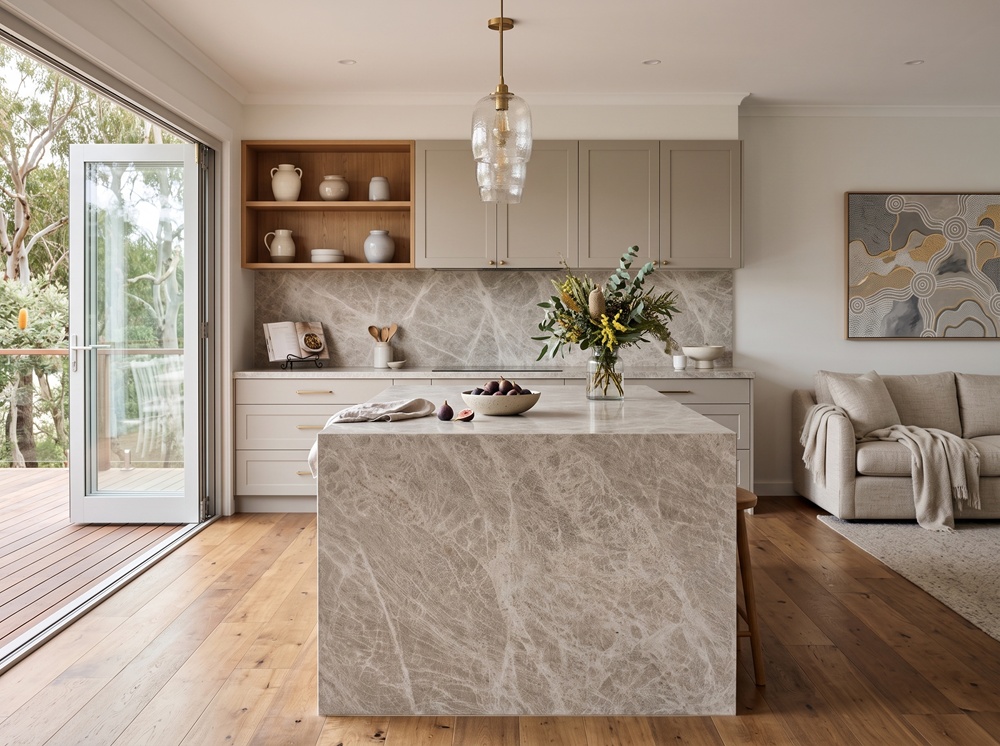
A dramatic natural slab can become the main architectural element of the kitchen when it is used across:
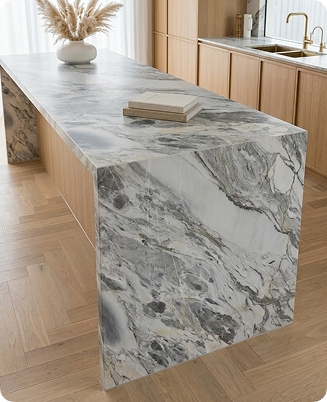
Careful vein placement and bookmatching can be just as important as the stone itself.
You can explore StoneMart projects for inspiration on how natural stone can be incorporated into finished interiors.
Granite is generally one of the more forgiving natural stones for kitchen use, although maintenance requirements vary between individual slabs.
Quartzite can also be relatively practical when correctly identified and properly sealed where necessary.
Marble usually requires greater awareness of acidic substances because of its susceptibility to etching.
Dolomite also requires appropriate natural stone care.
No natural stone should be considered completely maintenance-free.
Many natural stone benchtops benefit from an appropriate impregnating sealer, but not every stone requires exactly the same treatment or resealing interval.
The answer depends on:
Your stone supplier or fabricator should advise you on the correct care requirements for the slab you choose.
A sealer can help reduce liquid absorption, but it does not make a surface completely stain-proof or maintenance-free.
Natural stones such as granite and quartzite have strong heat resistance, but placing extremely hot cookware directly onto any premium benchtop is unnecessary.
Use a trivet.
A simple trivet protects against thermal shock, residues on cookware and accidental surface damage.
Good habits cost very little and can help maintain an expensive benchtop for years.
Even with hard stones such as granite or quartzite, a cutting board should be used.
This protects the surface and your knife blades.
Hard stone surfaces can rapidly dull kitchen knives, while dragged cookware or trapped grit can still cause unwanted marks.
There is no single price for a natural stone benchtop.
The final project price depends on considerably more than the stone type.
Factors include:
That is why comparing slab prices alone can be misleading.
For a detailed breakdown, read our guide to stone benchtop costs in Australia.
Australia prohibited the manufacture, supply, processing and installation of engineered stone benchtops, panels and slabs from 1 July 2024 under the national engineered stone prohibition.
This has changed the choices Australians consider when planning kitchen renovations.
Natural stone remains one of the major options available alongside other surfaces such as suitable porcelain and sintered products.
It is important not to confuse natural quartzite with traditional engineered quartz stone. Quartzite is a naturally formed stone, while engineered quartz products were manufactured using stone material combined with other constituents.
Whenever possible, inspect the actual slab before fabrication.
A small sample cannot show:
Before selecting your stone, consider your cabinetry, flooring, lighting, splashback and overall colour palette together.
Also ask how the fabricator plans to position important veins, seams and waterfall edges.
Before you approve a slab, ask:
Granite and genuine quartzite are both among the harder natural stones commonly used for kitchen benchtops. The actual performance depends on the individual stone, finish and installation.
Yes. Marble has been successfully used in kitchens for generations. However, it can etch when exposed to acidic substances and may develop scratches and patina over time. Homeowners should understand and accept these characteristics before choosing it.
Quartzite is generally harder and more resistant to acid etching than marble. Marble, however, has a distinctive appearance that many homeowners specifically want. The better option depends on whether practicality or the particular visual character of the stone matters more to you.
Yes. Granite remains one of the most durable natural stone options for kitchen benchtops. Modern granite slabs are available in many colours and patterns beyond the heavily speckled designs commonly associated with older kitchens.
Many dolomite slabs can be suitable for kitchen benchtops. Dolomite can be harder than some traditional marbles, but it still requires suitable care and should not automatically be treated like granite or quartzite.
No single sealing rule applies to every natural stone. Some materials have very low absorption while others are more porous. Ask your supplier or fabricator about the specific slab and sealer being used.
Granite is generally considered one of the more forgiving natural stones for heavily used kitchens. Suitable quartzite can also perform very well. Maintenance still varies between individual stones.
There is no universal winner.
Choose granite if durability and straightforward everyday use are your highest priorities.
Choose quartzite if you want natural movement and luxury appearance combined with the characteristics of a hard quartz-rich stone.
Choose marble if you value its distinctive natural beauty and are comfortable with the possibility of etching and patina.
Choose dolomite if you are attracted to softer marble-inspired patterns and understand the care requirements of the individual stone.
The most important step is to compare actual slabs and choose a material that fits both your design and the way your kitchen will be used.
To start comparing materials, browse StoneMart's natural stone slabs, view our completed projects, or contact StoneMart to discuss the right natural stone for your kitchen.
Showcase
Explore stunning interiors and exteriors showcasing premium marble, granite, travertine, limestone, and porcelain in beautifully designed spaces