
Search products
By name, colour, finish or material — “Bianco Carrara”, “travertine”, “honed”.
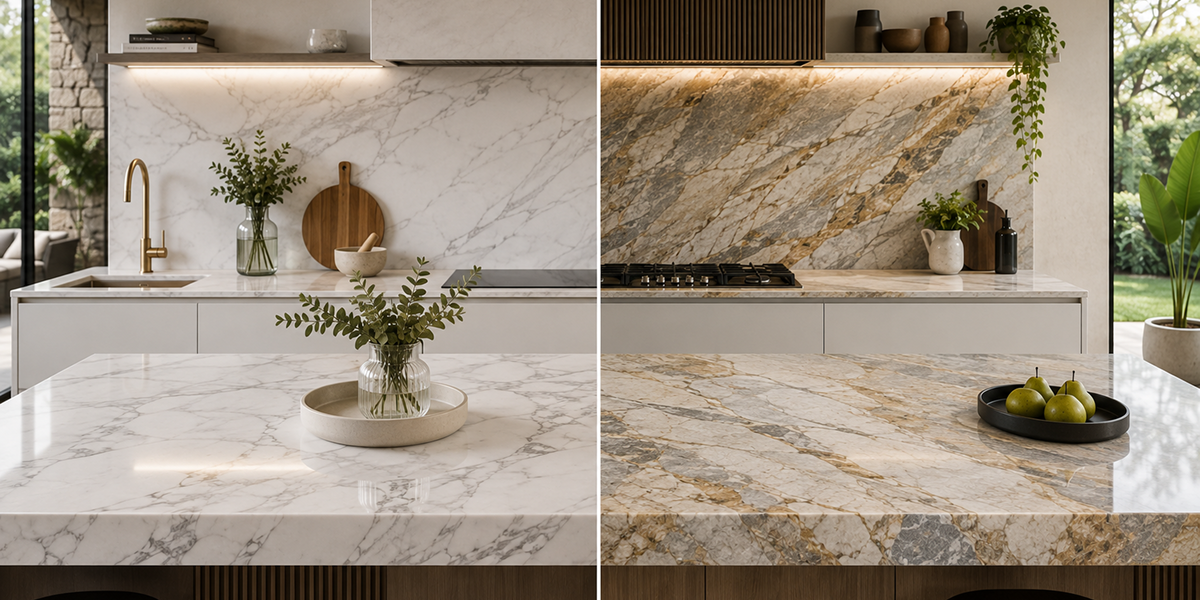
Marble and quartzite are two of the most popular natural stones for premium kitchen benchtops. Both offer distinctive veining, natural variation and a high-end appearance, but they behave differently in everyday use.
If you are choosing between marble and quartzite for your kitchen, the right option depends on how much maintenance you are comfortable with, how heavily the benchtop will be used, and the style you want to achieve.
This guide compares marble and quartzite benchtops across appearance, durability, staining, etching, maintenance, heat resistance and cost to help you decide which material is better suited to your kitchen.
For many busy kitchens, quartzite is
often the more practical choice because it is generally harder and more resistant to scratching and acidic substances than marble.
Marble, however, remains one of the most desirable natural stones for homeowners who value distinctive veining, timeless character and the natural patina that can develop over time.
There is no universal winner. Marble may be the better choice for design-focused kitchens, while quartzite may be better suited to homeowners who want a similar natural look with greater resistance to everyday wear.
Marble is a natural metamorphic stone formed primarily from limestone that has been transformed by heat and pressure over time.
It is known for its flowing veining, soft movement and wide range of colours. Marble can be found in classic whites and greys as well as dramatic greens, reds, browns and darker tones.
Because it is a natural material, each marble slab is unique. The veining, colour variation and mineral patterns differ from slab to slab.
Explore StoneMart's marble slabs in Melbourne to compare available colours, veining and finishes.
Quartzite is a natural metamorphic stone formed when sandstone is exposed to intense heat and pressure.
It is typically harder than marble and is valued for its durability, natural movement and wide range of colours.
Some quartzites have a soft, marble-like appearance with pale backgrounds and subtle veining, while others feature dramatic colours and patterns.
Quartzite is often chosen for kitchen benchtops because it combines natural-stone character with strong resistance to everyday wear.
| Feature | Marble | Quartzite |
|---|---|---|
| Appearance | Classic veining, soft movement and premium natural character | Ranges from subtle marble-like patterns to dramatic natural movement |
| Scratch Resistance | Moderate | Generally high |
| Acid Resistance | Lower and prone to etching | Generally higher |
| Stain Resistance | Can stain if liquids are absorbed | Generally good when properly sealed |
| Heat Resistance | Good | Good |
| Maintenance | Moderate | Low to moderate |
| Natural Variation | High | High |
Marble is often chosen because of its unmistakable natural character. It can feature delicate veins, bold movement and dramatic colour contrasts.
White marble with grey veining remains particularly popular in kitchens because it creates a clean, timeless appearance, but coloured marble can also create striking statement benchtops and islands.
Quartzite offers a broad range of looks. Some varieties resemble marble, while others display more dramatic patterns, crystalline textures and colour variation.
This makes quartzite a strong option for homeowners who want a natural-stone benchtop with a premium appearance but prefer a harder surface.
Quartzite is generally harder than marble and usually provides greater resistance to scratching.
This can make quartzite particularly appealing for busy kitchens where the benchtop is used frequently.
Marble is still durable enough for kitchen use, but it is softer and can scratch more easily. Chopping boards should always be used rather than cutting directly on the surface.
Neither material should be treated as completely scratch-proof or damage-proof.
This is one of the biggest differences between marble and quartzite.
Marble contains calcium carbonate, which reacts with acids. Common kitchen substances such as lemon juice, vinegar, wine and some cleaning products can cause etching.
Etching changes the surface finish and may leave a dull or lighter-looking mark.
Quartzite is generally more resistant to acidic substances than marble, making it a more forgiving option for kitchens where acidic foods and liquids are frequently used.
However, the exact performance of any natural stone can vary, so it is important to understand the characteristics of the specific slab you are considering.
Both marble and quartzite can absorb liquids to varying degrees because they are natural stones.
A suitable penetrating sealer can help reduce absorption and staining, but sealing does not make either material completely stain-proof.
For both materials, spills should be cleaned promptly, particularly:
Quartzite often provides better resistance to everyday staining when properly sealed, but individual stone characteristics still matter.
Both marble and quartzite handle normal kitchen heat well.
Even so, using trivets or heat-resistant pads under very hot cookware is recommended for both materials.
This helps protect the stone surface as well as any sealer or treatment that has been applied.
Marble requires a little more attention because of its sensitivity to acidic substances and scratching.
Good marble care includes:
For a more detailed guide, read our article on the pros and cons of marble benchtops in the kitchen.
Quartzite is generally easier to maintain because it is harder and more resistant to acidic substances.
It should still be cleaned with stone-safe products and may require sealing depending on the slab, finish and sealer used.
As with marble, there is no single sealing schedule that applies to every quartzite benchtop.
The cost of marble and quartzite benchtops can vary significantly.
The final price depends on much more than the material name. Important factors include:
Stone variety
Slab rarity and availability
Slab size
Number of slabs required
Thickness
Fabrication
Edge profiles
Sink and cooktop cut-outs
Waterfall ends
Transport
Installation complexity
Some quartzites can cost more than many marbles, while rare or highly decorative marbles can also sit at the premium end of the market.
For a broader breakdown of pricing factors, read our stone benchtop cost guide for Australia.
Quartzite is often the stronger choice for a busy kitchen because it generally offers better scratch resistance and greater resistance to acidic substances.
This can make it more forgiving for households that cook frequently or want a natural-stone surface with fewer concerns about everyday marks.
That does not mean marble cannot work in a busy kitchen. It simply requires greater awareness of spills, acids and surface care.
Both materials can create a premium kitchen, but marble remains particularly popular for homeowners who want distinctive veining and traditional natural-stone character.
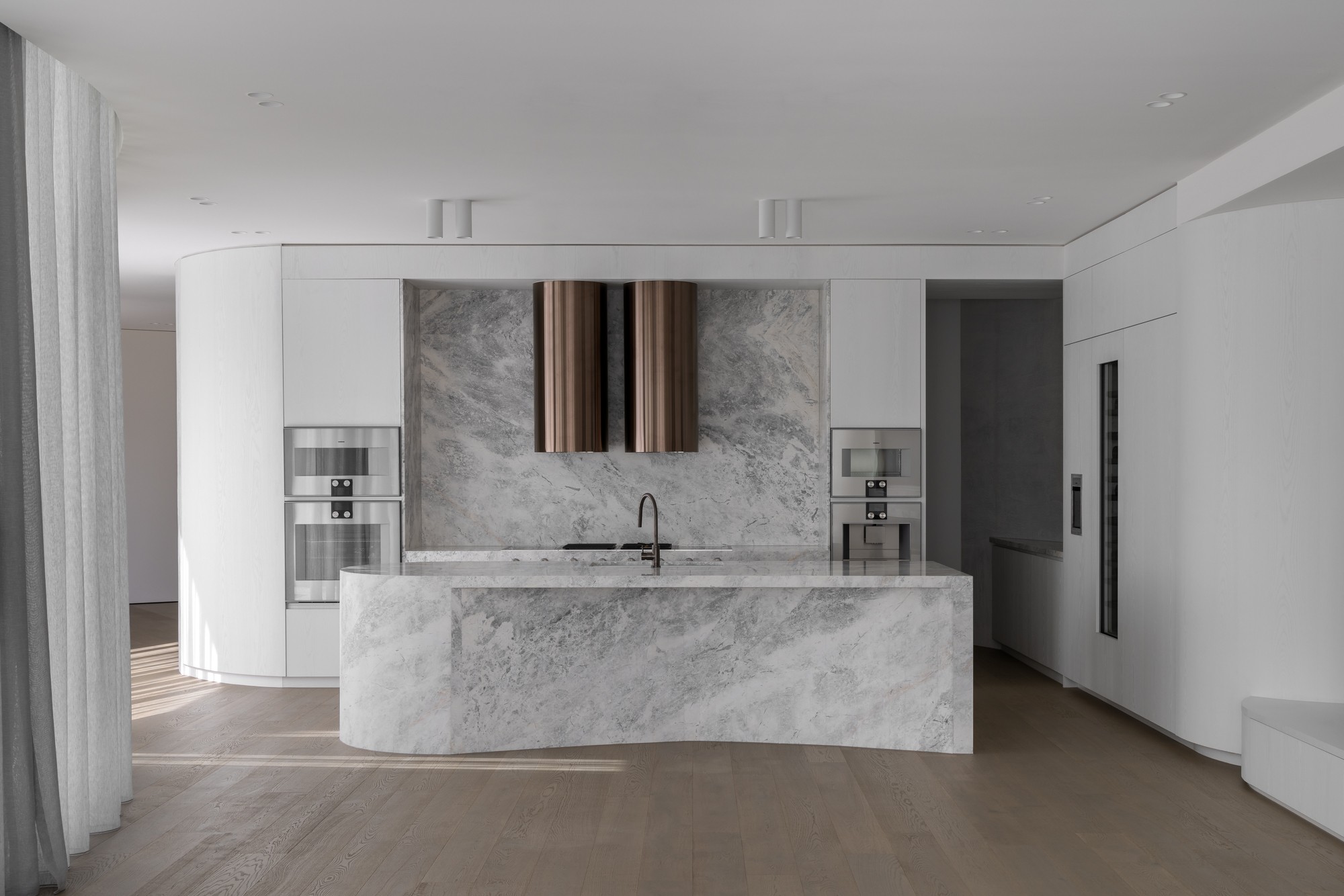
Marble can create dramatic feature islands, splashbacks and waterfall ends where the appearance of the stone is the main design focus.
Quartzite can deliver a similarly premium result while providing greater durability, especially when a marble-like quartzite is selected.
Both marble and quartzite can work exceptionally well for kitchen islands.
If the island is heavily used for food preparation, entertaining and everyday family activities, quartzite may provide greater peace of mind because of its durability.
If the island is primarily a statement feature and you value natural veining above everything else, marble may be the preferred option.
Explore our stone benchtops in Melbourne to compare natural stone options for kitchen islands, benchtops and splashbacks.
Granite is another natural stone worth considering alongside marble and quartzite.
It is generally hard, durable and resistant to scratching, making it suitable for hardworking kitchen benchtops.
Granite also comes in a wide range of colours and patterns, although its appearance can be quite different from the flowing veining commonly associated with marble and some quartzites.
If you are comparing multiple materials, read our guide to the best natural stone for kitchen benchtops in Australia.
Before choosing a slab, consider the following:
Because both marble and quartzite are natural materials, viewing the actual slab before fabrication is highly recommended.
Quartzite is generally harder and more resistant to scratching and acidic substances, which can make it more practical for busy kitchens. Marble may be preferred by homeowners who value its distinctive veining and natural patina.
Quartzite can absorb liquids to varying degrees. A suitable sealer can help reduce staining, and spills should still be cleaned promptly.
Yes, marble can stain if liquids penetrate the stone. Prompt cleaning and appropriate sealing can help reduce the risk.
Generally, yes. Marble is softer than quartzite and is more susceptible to scratching from knives, ceramic items and abrasive particles.
Quartzite is generally more resistant to acidic substances. Marble can etch when exposed to lemon juice, vinegar, wine and other acids.
Many natural stone benchtops benefit from sealing, but requirements vary depending on the particular stone, finish and sealer used.
There is no universal answer. Pricing depends on the specific stone variety, rarity, slab size, fabrication and installation requirements.
Yes. Both materials can be used for splashbacks, including full-height stone splashbacks that continue the same slab or pattern used on the benchtop.
Choose marble if your priority is classic natural beauty, distinctive veining and a surface that can develop character and patina over time.
Choose quartzite if you want a premium natural-stone appearance with generally greater scratch resistance and better resistance to acidic substances.
For many Australian kitchens, the final decision comes down to lifestyle, maintenance expectations, budget and the individual slab that best suits the design.
If you are planning a new kitchen or renovation, explore StoneMart's marble slabs in Melbourne and natural stone benchtop options to compare colours, patterns and available slabs.
You can also contact StoneMart to discuss the right natural stone for your kitchen project.
Showcase
Explore stunning interiors and exteriors showcasing premium marble, granite, travertine, limestone, and porcelain in beautifully designed spaces